

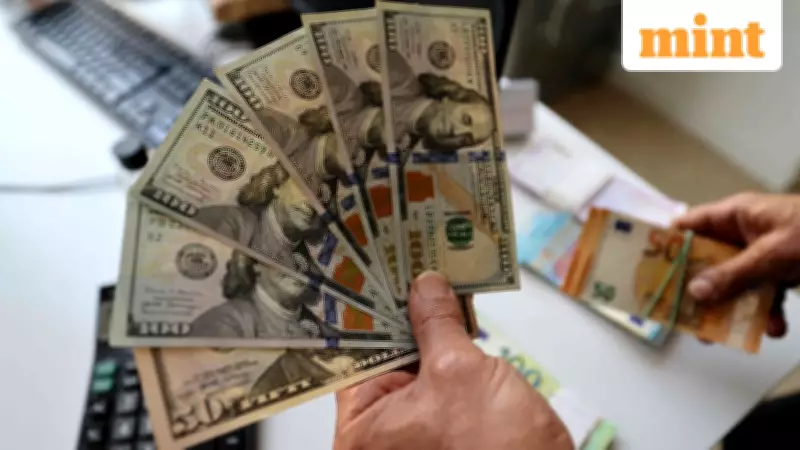
The Dollar's January Decline: A Tale of Two Perspectives
The US dollar is experiencing its most significant January decline in eight years, continuing a challenging trend from 2025. The dollar index is on track to close this month with a 1.7% loss, marking the steepest January drop since 2018. This downward movement has sparked intense debate among economists and traders about the greenback's future trajectory.
Factors Driving Dollar Weakness
Several key factors are contributing to the dollar's current struggles. Renewed uncertainty surrounding President Donald Trump's foreign policy approach has created market unease. Additionally, concerns about potential threats to the Federal Reserve's independence and the possibility of a partial US government shutdown this weekend are weighing heavily on the currency.
Options market activity clearly demonstrates that traders are positioning for continued dollar weakness. With the euro trading at $1.19, investors are paying premium prices to bet on its rise to $1.24 by March. Meanwhile, demand for protection against a drop to $1.16 remains relatively low. This market skew indicates that participants see a dollar selloff as more likely than a recovery.

"The 'Sell America' trade is back," observed strategist Daniel von Ahlen from TS Lombard. His firm is betting on a basket of undervalued European currencies, including those from the Czech Republic and Poland, which could indirectly benefit from Germany's spending patterns.
The Contrarian View: Why Dollar Strength Could Return
Despite the prevailing negative sentiment, some economists are presenting compelling arguments for a potential dollar rebound. Jonas Goltermann, Capital Economics' deputy chief markets economist, highlighted several supportive factors in a recent analysis.
Surges in AI-related investment and a stabilizing labor market suggest the US economy could gain momentum, potentially pushing the dollar higher. Goltermann also noted that President Trump has become more selective in his tariff approach compared to his initial trade war strategy, which had targeted virtually all trading partners.
This economic resilience is weakening the case for further interest-rate cuts. Higher-for-longer interest rates typically keep foreign investors attracted to US markets, providing fundamental support for the dollar. The Federal Reserve's recent decision to keep rates on hold reinforces this dynamic.
"Our forecasts for 2026 point to a return of U.S. exceptionalism this year," Goltermann added, referring to the belief that the United States maintains distinctive advantages over its peers that benefit both its equity markets and its status as the world's reserve currency.
Institutional Perspectives on Dollar Stability
Treasury Secretary Scott Bessent offered measured optimism during a CNBC interview, stating that "over time the prices [of the dollar] could fluctuate, but if we have sound policies the money will flow in." This perspective emphasizes the importance of policy stability in maintaining dollar strength.
Gavekal strategist Will Denyer pointed to another crucial factor: the potential for the Federal Reserve to preserve its independence. He suggested this could help the dollar "snap back from the current selloff." However, Denyer also warned that Trump administration actions—including attempts to fire Fed Governor Lisa Cook and Justice Department investigations of Chair Jerome Powell—have raised legitimate concerns about central bank independence.
Furthermore, Trump's stance toward Greenland and NATO allies continues to present negative implications for the dollar, as Europe and other global regions might gradually shift away from US assets in response to geopolitical tensions.
The Broader Market Context
The current dollar debate occurs against a backdrop of shifting global economic dynamics. While many investors maintain a negative outlook on the greenback following its dismal 2025 performance, the contrarian view focusing on potential support levers for the dollar is gaining attention.
This divergence in perspectives creates a complex landscape for currency traders and policymakers alike. The dollar's performance in coming months will likely hinge on multiple variables, including:

- US economic growth relative to other major economies
- Federal Reserve policy decisions and perceived independence
- Geopolitical developments and trade relationships
- Global investor sentiment toward US assets
As the world's primary reserve currency, the dollar's fluctuations have far-reaching implications for international trade, investment flows, and economic stability across global markets.





