Iran's Strait of Hormuz Blockade Revives Memories of 1956 Suez Canal Crisis
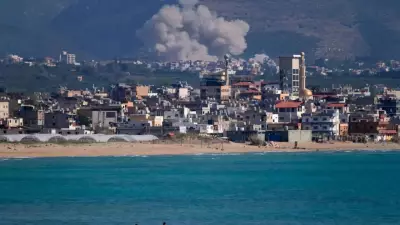
The ongoing Iranian blockade of the Strait of Hormuz and the severe economic toll it imposes on the global economy today starkly recall a similar dark chapter from history. Nearly a decade after World War II ended, the world faced a parallel crisis when the Suez Canal was shut down following a conflict involving Egypt, Israel, the United Kingdom, and France.
The Suez Canal: A Lifeline for Global Trade Disrupted
The Suez Canal, which serves as a critical artery for international commerce by providing the shortest shipping route between Asia, Europe, and America, dominated front-page headlines worldwide for months during the 1956 crisis. This conflict was ignited by Egyptian President Gamal Abdel Nasser's bold decision to nationalize the Anglo-French company that operated the canal, which lies within Egyptian territory.
However, the geopolitical landscape of West Asia in the autumn of 1956 was markedly different from the dynamics that would unfold seventy years later in the spring of 2026. On November 1, 1956, Iran, then a monarchy under Mohammad Reza Pahlavi, aligned with the United States and the Soviet Union in the UN Security Council. They supported a resolution, proposed by Yugoslavia, calling for an emergency General Assembly meeting to halt the aggression by Israel, the UK, and France against Egypt.

Ship Sunk, Canal Blocked: Escalation of Hostilities
Reports from the time detailed how the United States, by backing the Security Council resolution, effectively split from its Western allies, the UK and France, over their use of force in Egypt. The resolution garnered support from other nations including Cuba, Peru, and China, while France and the UK opposed it. The motion passed with a 7–2 vote, with Belgium and Australia abstaining.
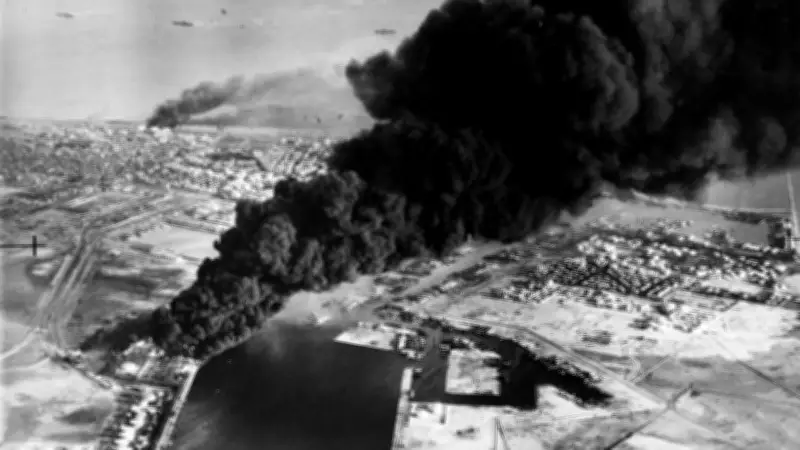
Simultaneously, Britain paralyzed shipping in the Suez Canal after the Royal Air Force sank the Egyptian warship Akka in Timsah Lake on November 1. The following day, Anglo-French planes destroyed another Egyptian vessel near the canal's entrance. This escalation coincided with Israel's capture of the Gaza Strip, then under Egyptian control, as highlighted by front-page headlines proclaiming "Gaza falls: Entire strip now in Israeli hands."
The Suez battle resulted in the canal's closure for over five months, with operations resuming only by late April 1957. In response to the sinking of the Akka, Nasser delivered a passionate 20-minute broadcast to his nation, vowing to "fight from village to village, from place to place, until Egypt wins victory."
Eisenhower's Peacemaking Role Contrasts with Modern Aggression
In stark contrast to contemporary aggressive stances, such as Donald Trump's threats against Iran's Kharg Island, U.S. President Dwight D. Eisenhower played a pivotal peacemaking role during the Suez crisis. He was instrumental in drafting a UN General Assembly resolution, introduced by Secretary of State John Foster Dulles on November 2, which called for an immediate ceasefire in Egypt. Dulles warned that the conflict "might develop into World War III."
The resolution demanded Israel's withdrawal behind armistice lines, urged the reopening of the Suez Canal after a ceasefire, and called on the UK and France to refrain from moving war material in the region. It passed with a 64–5 vote, backed by the Soviet Union, Iran, China, and others, while Israel, France, the UK, Australia, and New Zealand opposed it. Nations like Belgium and Canada abstained.
India, under Prime Minister Jawaharlal Nehru, strongly supported the UN resolution. Nehru wrote to UN Secretary-General Dag Hammarskjold, condemning Israel's aggression and criticizing the UK and France for invading Egyptian territory instead of stopping it.
Genesis of the Suez Crisis: Nationalization and Geopolitical Maneuvers
The crisis originated from Nasser's nationalization of the Anglo-French Suez Canal Company, a move prompted by the U.S. and UK withdrawing funding for the Aswan Dam project. Nasser aimed to use canal toll revenues to finance the dam. While the U.S., indirectly affected by its Cold War allies' involvement, favored diplomacy, the UK and France adopted an aggressive approach, collaborating with Israel to gain control of the Gaza Strip and Sinai Peninsula.

As part of this strategy, Israeli forces attacked Sinai in late October 1956, with French aircraft joining the strikes. Reports from the time highlighted the division within the UK Parliament, where opposition Labour MPs demanded Prime Minister Anthony Eden's resignation, citing shame over British bombings in Egypt. Opposition leader Hugh Gaitskell called for Britain to accept the UN resolution to restore the country's reputation.
End of the Blockade: UN Intervention and Withdrawal
The autumn of 1956 contrasted sharply with the spring of 2026, as the UN held significant influence then. Following the General Assembly resolution, a UN peacekeeping force arrived in Egypt in mid-November to oversee troop withdrawals. By late December 1956, French and British forces had left Egyptian territory, though Israel retained troops in Gaza until March 1957, when UN pressure forced their withdrawal.
The crisis concluded in 1957, with the first British ship passing through the canal on April 19 after paying tolls to Egyptian authorities. A U.S. ship followed soon after, while France initially boycotted but eventually relented due to high shipping costs. This historical episode underscores the enduring impact of geopolitical conflicts on global trade and economy, mirroring today's challenges with the Strait of Hormuz blockade.