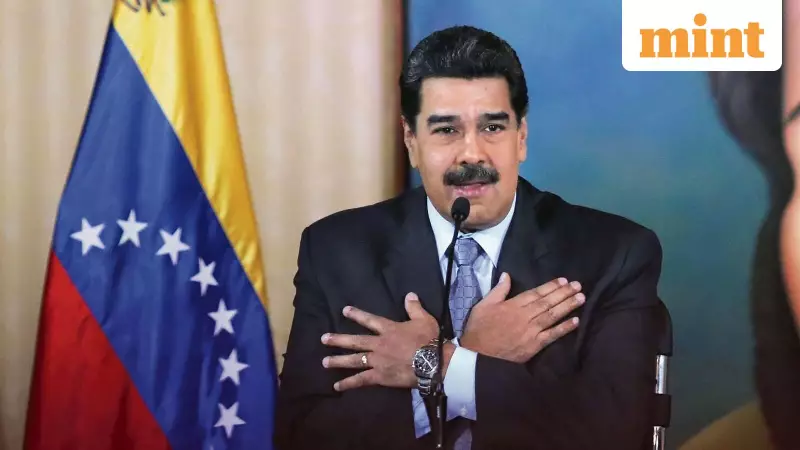
The geopolitical landscape of Latin America was violently redrawn on a Saturday in early January 2026, when US forces executed a stunning operation in Caracas. The target: Nicolás Maduro, the entrenched leader whose regime presided over the collapse of a once-prosperous oil giant. His capture and extradition to New York to face "narco-terrorism" charges was not merely a bold strike by Washington but the culmination of years of regional failure.
The Caracas Shock and a New Doctrine
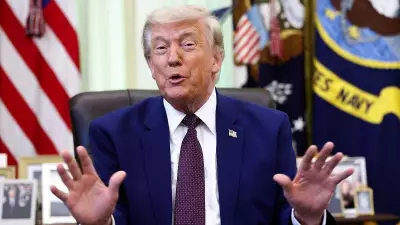
The dramatic seizure of Maduro from his stronghold served as a fiery baptism for what analysts are calling 'Trump's Corollary' to the Monroe Doctrine. This updated US strategy, unveiled less than a month prior, explicitly pledged to restore American pre-eminence in the Western Hemisphere by force if necessary. The operation effectively decapitated the Chavista regime. In a move that stunned observers, former President Donald Trump subsequently vowed to temporarily administer Venezuela directly, placing a South American nation bordering Brazil and holding the world's largest oil reserves under remote US control.
A Region Divided and Complicit
The reaction across Latin America fractured along predictable ideological lines. Leftist governments in Brazil, Chile, and Mexico, alongside Cuba, condemned the blatant violation of Venezuelan sovereignty. Conversely, right-leaning leaders in Argentina and Ecuador welcomed the ouster of the despised dictator. However, both perspectives contain truth. While Trump acted with clear disregard for international law, Maduro and his cronies consistently tempted fate. They squandered multiple opportunities for a negotiated political transition, choosing instead to brazenly steal the 2024 presidential election, a fact widely acknowledged internationally.

Rather than mounting a unified front, regional leaders had for years been cynically focused on domestic politics and commercial ties with the Chavista state. Figures from Brazil's Lula, who rolled out a red carpet for Maduro in Brasília in 2023, to Argentina's Fernández and Mexico's López Obrador were, at minimum, complicit as a gangster kleptocracy entrenched itself. Their inaction as millions of Venezuelans fled across borders stands as a stark reminder of a region that failed to act in its broader collective interest.
Uncertain Future and a Chance for Redemption
The immediate future is fraught with unknowns, chief among them being how Venezuela will be governed in the coming weeks. The US risks echoing its imperialist past by assuming control of a sovereign nation. The legitimacy of this move will hinge on Trump's next steps and a genuine commitment to a democratic transition. This would necessitate respecting the will of Venezuelan voters and honouring the results of the last election, which showed opposition candidate Edmundo González Urrutia winning roughly 70% of the vote.
Despite the controversy, Trump's action holds significant regional popularity. With Latin America shifting decisively to the right and Maduro deeply despised, societies plagued by insecurity and corruption may temporarily applaud the imposition of order. This context raises the spectre of Cuba's dictatorship as the next potential domino to fall.
This crisis presents a final chance for Latin American governments to redeem themselves. Instead of defending a collapsed regime, leaders like Lula, Mexico's Claudia Sheinbaum, and Colombia's Gustavo Petro could play a historic role in steering a peaceful, positive transition. The region can support daunting economic reconstruction, supply humanitarian aid, and facilitate the return of millions of exiles. Venezuelans, now facing a new chapter, will long remember who extended a helping hand in their hour of need—and who did not.