

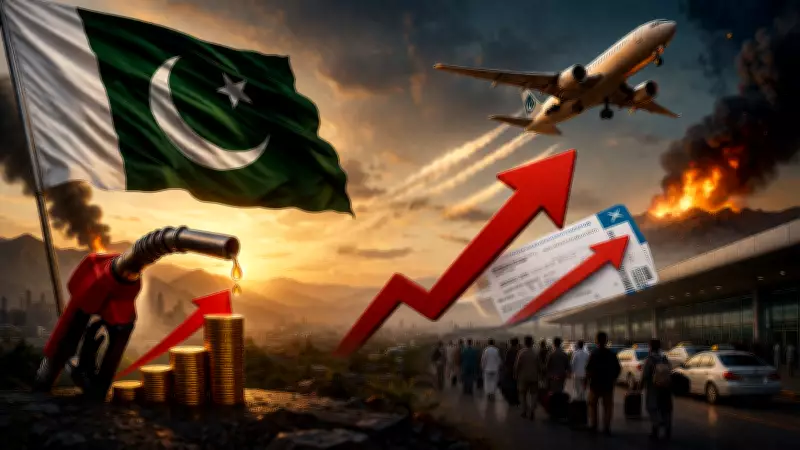
Middle East Crisis Sends Shockwaves Through Pakistan's Fragile Economy
The escalating conflict in the Middle East, involving Iran, Israel, and the United States, is creating severe economic ripples far beyond the region's borders. Pakistan, already grappling with deep structural vulnerabilities, finds itself on the brink of a full-blown economic crisis as global market volatility intensifies.
Energy Shock Hits Hard: LNG Prices Skyrocket
International oil prices have surged dramatically following Iran's tightening control over the strategically vital Strait of Hormuz. This critical corridor handles a substantial portion of the world's oil supply, and even minor disruptions are sending tremors through global fuel markets.
For Pakistan, the impact has been immediate and severe. The cost of liquefied natural gas (LNG), a crucial fuel for power generation and industry, has exploded. Shipments that cost approximately $25 million just weeks ago are now reportedly exceeding $100 million due to acute supply shortages and market uncertainty.

Major supplier Qatar has declared force majeure following production disruptions, a move mirrored by global suppliers like Shell for contracts linked to Qatari supplies. This perfect storm is placing immense pressure on Pakistan's energy imports.
Fuel Price Hikes and Soaring Inflation
The global energy shock is now directly translating into higher daily costs for Pakistani households. The government recently approved a steep increase in the levy on high-octane fuel, raising it by PKR 200 per litre, from PKR 100 to PKR 300.
This follows a previous hike on March 6, where petrol and diesel prices were raised by PKR 55 per litre amid rising global oil prices driven by the regional conflict. Petrol now costs PKR 321.17 per litre, up from PKR 266.17, while diesel has risen to PKR 335.86 from PKR 280.86.
Given that fuel is the backbone of transportation, logistics, and manufacturing, these increases are expected to push overall inflation significantly higher, further straining household budgets.
Aviation Sector Under Severe Pressure
The aviation industry is feeling acute pressure from the crisis. Fuel costs have surged, with Jet A-1 prices rising by around PKR 154 per litre and aviation gasoline by nearly PKR 80 per litre.
Airlines are struggling to manage these escalating costs and have passed much of the burden onto passengers, leading to substantially higher airfares, particularly during the recent Eid ul-Fitr period. Domestic fares increased by 15% to 20%, with some passengers paying up to 30% more.
Ticket prices for domestic routes have jumped by PKR 10,000 to PKR 15,000, while international fares have surged between PKR 30,000 and PKR 150,000 depending on routes and demand. Further increases appear unavoidable if the regional situation persists.
Government Finances and Reserves Under Strain
The crisis is exposing Pakistan's deeper economic weaknesses, including limited foreign exchange reserves and high government spending. Senior journalist Shams Kerio warned that prolonged conflict could have severe consequences, stating, "If the war continues, Pakistan's economy could collapse due to lack of reserves and weak financial accountability."
The government has initiated precautionary measures. Prime Minister Shehbaz Sharif chaired a meeting to review fuel reserves and supply, with officials stating that "adequate stocks of petroleum products" are available for now. However, authorities have warned that the unstable regional situation could disrupt supplies, prompting immediate austerity measures.
Austerity Measures and Impact on Daily Life
To manage the crisis, the government has introduced strict fuel-saving directives. These include a 50% cut in fuel allowances for official vehicles, implementation of a four-day work week, and a mandate for half of public sector employees to work from home, excluding those in essential services.
Citizens have been urged to conserve fuel to "avert the risk of petroleum products' supply getting affected in the coming days," with specific suggestions such as carpooling and limiting unnecessary travel. The Prime Minister has called for a "comprehensive strategy" to handle any emergency, with the Intelligence Bureau tasked with monitoring implementation.

Vulnerable Populations Bear the Brunt
The economic burden is expected to fall hardest on lower-income groups. Kerio noted that daily wage workers are already under immense pressure, warning that rising fuel prices could exacerbate food insecurity and unemployment. "Daily wage workers are already struggling. If petrol prices rise further, food insecurity and unemployment will worsen," he emphasized.
Higher fuel costs are also increasing expenses in agriculture and industry, which is likely to push up prices of essential goods, including food and household items, creating a cascading effect on the cost of living.
Structural Challenges Compound the Crisis
The current crisis arrives when Pakistan is already confronting deep structural challenges. In education, nearly 28% of children aged 5-16 remain out of school, with girls disproportionately affected. The national literacy rate stands at 63%, with significant gaps between urban and rural areas and between men and women.
Experts indicate that financial pressures, household responsibilities, and limited access to secondary education continue to drive high dropout rates, especially among girls. These longstanding issues severely reduce the country's capacity to absorb economic shocks and sustain growth.
External Support and an Uncertain Future
Amid the turmoil, the Asian Development Bank is expected to provide about $10 billion in financing over the next five years under its 2026–30 Country Partnership Strategy. ADB Country Director Emma Fan stated, "The new CPS is tailored to address Pakistan's structural challenges and promote robust and lasting growth, which benefits the whole country, especially the poor and vulnerable."
While this offers some potential support, uncertainty remains extremely high. Kerio warned that the conflict could escalate further, potentially drawing in other global powers. However, he also expressed cautious optimism: "If negotiations succeed and the war ends, there is a chance for gradual recovery."
He stressed that dialogue remains paramount, concluding, "Issues can only be resolved through dialogue, not conflict. Peace is possible only with sincerity, trust and a commitment to dialogue." The path forward for Pakistan's economy remains precarious, heavily dependent on regional stability and effective domestic crisis management.





