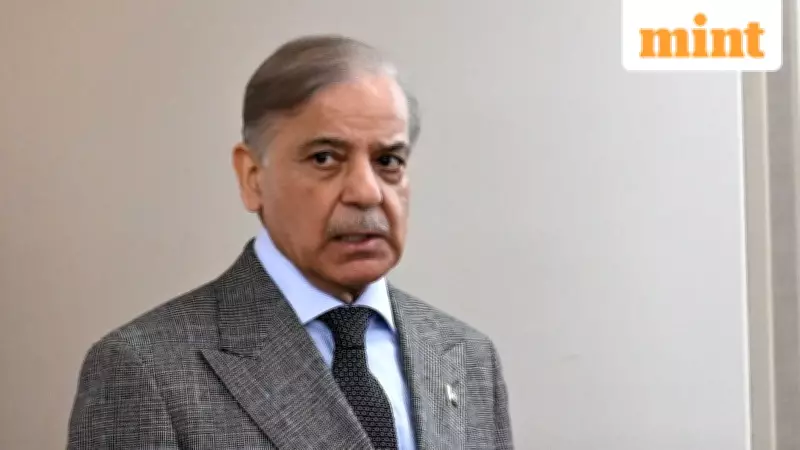
Pakistan Prime Minister Shehbaz Sharif Laments Foreign Aid Dependence as National Humiliation
In a stark and candid admission, Pakistan Prime Minister Shehbaz Sharif has voiced profound concern over the nation's heavy reliance on external financing, describing the constant pursuit of foreign aid as a compromise of national honor and a source of significant distress for the country's leadership. Addressing major exporters and industry leaders in Islamabad, Sharif emphasized how debt obligations are impacting Pakistan's international standing and called for a decisive shift toward new economic frameworks to restore sovereignty.
"Our Heads Bow Down in Shame": Sharif's Emotional Appeal
Prime Minister Sharif did not mince words when discussing the emotional toll of borrowing. "We feel ashamed when Field Marshal Asim Munir and I go around the world begging for money. Taking loans is a huge burden on our self-respect. Our heads bow down in shame. We cannot say no to many things they want us to do," Sharif stated, as reported by local broadcaster A1tv. This frank acknowledgment underscores the persistent financial volatility plaguing Pakistan and its deep dependence on global creditors, particularly as the country negotiates International Monetary Fund packages and seeks loan extensions to stabilize its economy.
Gratitude Toward "All-Weather Friends" and Key Allies
Despite the humiliation associated with borrowing, Sharif expressed sincere gratitude toward Pakistan's steadfast allies, whom he referred to as "all-weather friends." These nations include:

- China: As a primary creditor, China has deferred billions in deposits to assist with Pakistan's debt management, with approximately $4 billion slated for the 2024-25 period. The China-Pakistan Economic Corridor (CPEC) remains the foundational investment pillar, with over $60 billion committed to energy and transit projects.
- Saudi Arabia: Reinforcing its commitment, Saudi Arabia renewed a $3 billion deposit in late 2024 and offered a $1.2 billion oil credit line for 2025. Riyadh is also exploring substantial investments in mining and information technology, with potential deals ranging from $5 billion to $25 billion.
- United Arab Emirates (UAE): The UAE extended a $2 billion loan in early 2025 while pledging billions more for infrastructure and port management, with investment targets reaching up to $25 billion.
- Qatar: Qatar has formalized a $3 billion investment protocol focusing on aviation and agriculture, continuing its role as a vital supplier of liquefied natural gas (LNG) to Pakistan.
These strategic alliances are fundamental to Pakistan's economic survival, with funds being channeled through mechanisms like the CPEC and the Special Investment Facilitation Council (SIFC). The country's financial stability remains tightly tethered to these nations, whose capital injections are crucial for maintaining foreign reserves and averting a liquidity crisis.
Warning on Expanding Poverty and Unemployment Crisis
Simultaneously, Prime Minister Sharif issued a grave warning about the expanding social challenges facing Pakistan. He cited a lack of progress in research and technological advancement as contributing factors to the nation's economic woes. Pakistan is currently grappling with a dire social emergency, characterized by:
- Poverty Rates: Reportedly nearing 45%, driven by high inflation and the devastating impacts of climate disasters.
- Unemployment: Hitting approximately 7.1%, leaving over eight million people without work and exacerbating social unrest.
- Export Sector Limitations: Remaining disproportionately tied to basic textiles, highlighting the need for diversification and innovation in trade.
Sharif's remarks underscore the urgent need for Pakistan to pivot away from its reliance on external financing and toward sustainable economic models that foster self-reliance, technological growth, and social stability. The prime minister's emotional appeal reflects a broader national sentiment of frustration and a call for transformative change in economic policy and international relations.