

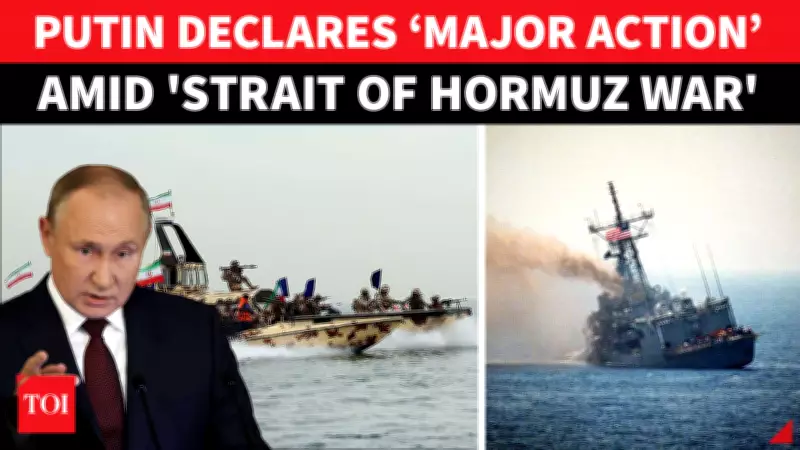
Putin Warns of Global Oil Crisis Amid Iran War, Holds Emergency Energy Meeting
Russian President Vladimir Putin has chaired an urgent meeting on global energy security as the conflict in Iran escalates, issuing a dire warning that disruptions in the Strait of Hormuz could send severe shockwaves through international oil and gas markets. According to his detailed remarks, attempts to destabilize the Middle East have already triggered significant logistical issues, rising commodity prices, and substantial threats to long-term supply chains.
Escalating Threats to Global Energy Supply
Putin emphasized that the ongoing Iran war is creating unprecedented challenges for global energy infrastructure. The Strait of Hormuz, a critical chokepoint for oil shipments, faces potential blockades or attacks that could halt a significant portion of the world's oil flow. This scenario would lead to immediate price spikes and supply shortages across continents.
The Russian leader highlighted that current instability has already caused:

- Increased logistical complications for oil tankers and gas carriers
- Substantial rises in global commodity prices
- Growing concerns about the reliability of long-term energy supply chains
- Heightened geopolitical tensions affecting market confidence
Russia's Position as a Reliable Energy Supplier
During the emergency meeting, Putin reaffirmed Russia's commitment to maintaining stable energy supplies to its key partners in the Asia-Pacific region and Europe. He noted that global demand for secure oil and gas sources is intensifying as nations seek to diversify away from conflict-prone areas.
"Russia remains a dependable energy partner during these turbulent times," Putin stated, underscoring the country's strategic importance in global energy markets. He pointed to Russia's extensive pipeline networks and export capabilities as crucial assets for ensuring energy security amid the Middle East crisis.
Broader Implications for Global Economy
The emergency meeting comes amid reports of multiple attacks in the Gulf region, including strikes on American military bases and infrastructure. These developments have raised fears of a wider regional conflict that could completely disrupt oil transportation through the Persian Gulf.
Energy analysts warn that any prolonged closure of the Strait of Hormuz would have catastrophic consequences for the global economy, potentially triggering:
- Record-high oil prices exceeding previous peaks
- Supply chain breakdowns affecting multiple industries
- Economic slowdowns in energy-dependent nations
- Increased geopolitical competition for alternative energy routes
Putin's warning represents one of the most significant official acknowledgments of how the Iran conflict could transform global energy dynamics. As military actions continue to escalate in the region, world leaders are increasingly concerned about maintaining stable energy supplies while navigating complex geopolitical challenges.






