

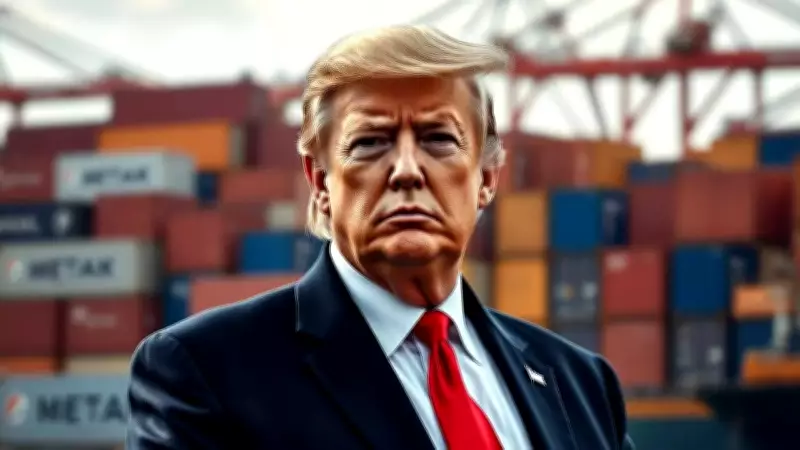
Trump's Aggressive Tariff Moves Ignite Global Economic Concerns
In a dramatic escalation of trade tensions, US President Donald Trump has announced a sweeping 15% global tariff, sparking fears of significant economic turbulence worldwide. This move comes on the heels of a landmark decision by the US Supreme Court, which struck down Trump's previous reciprocal tariffs, prompting the president to first levy a 10% tariff and then rapidly increase it to 15% within a single day.
The revised tariffs are based on Section 122, a largely untested legal provision, raising questions about their long-term viability and impact. US Trade Representative Jamieson Greer has stated that none of the nations with existing trade agreements with Washington have indicated any intention to reconsider or withdraw from those arrangements following the court's ruling.
International Reactions to Trump's Tariff Strategy
Major trading partners across the globe are carefully evaluating both the Supreme Court verdict and Trump's subsequent tariff moves, seeking to understand the full implications for their economies.

India's Cautious Approach
In response to the uncertainty created by the US Supreme Court's decision, India has opted to postpone the planned trip of its delegation to Washington, DC. This delegation was intended to finalize the legal wording of an interim trade agreement framework. Commerce department officials indicated that both sides felt it prudent to delay the visit by chief negotiator Darpan Jain and his team until the recent developments and their potential consequences are fully assessed.
Jain had been scheduled to engage in three days of discussions beginning Monday, ahead of US Trade Representative Jamieson Greer's proposed visit to India to formally sign the pact. According to reports, there are suggestions within certain sections of the Indian government that the Modi administration may be open to examining whether the Supreme Court ruling has created additional flexibility to negotiate more favorable terms.
China's Firm Stance
China has taken a strong position against the US tariff measures, urging Washington to do away with what it has called 'unilateral tariffs.' In a statement issued on Monday, China's commerce ministry announced it was conducting a comprehensive review of the US Supreme Court's ruling on tariffs while calling on the Trump administration to remove what it described as 'relevant unilateral tariff measures' affecting trade partners.
The ministry asserted that US unilateral tariffs breach both international trade norms and domestic US law, adding that the tariffs do not serve the interests of any party. China emphasized it would continue monitoring developments closely and take firm steps to protect its own economic interests.
Europe's Unified Response
The European Commission has delivered a clear message to the United States: 'A deal is a deal.' The Commission urged the US to adhere to the commitments outlined in the EU-US trade agreement concluded last year, stating that the current situation does not support the objective of achieving "fair, balanced, and mutually beneficial" transatlantic trade and investment.
Emphasizing the need for compliance, European officials stressed that agreements must be honored. Meanwhile, the European Parliament has once again deferred a planned vote on the European Union's trade agreement with the United States, marking the second postponement after President Trump introduced the 15% tariff on imports.
European Central Bank President Christine Lagarde cautioned that ongoing turbulence in US trade policy could unsettle the business environment, expressing hope that any tariff measures would be carefully considered to provide clarity for companies. Lagarde noted that reopening trade tensions would likely trigger fresh disruptions, adding that businesses prefer stability over legal battles.

Japan's Critical Assessment
In Japan, a government spokesperson stated that Tokyo would closely review both the court's ruling and the Trump administration's response before determining its next steps. Itsunori Onodera, a senior figure in Prime Minister Sanae Takaichi's Liberal Democratic Party and former defence minister, criticized the new tariffs as "outrageous," expressing concern that such measures could prompt more countries to distance themselves from the United States, even among allies.
Other Global Responses
Taiwan is keeping a close watch on developments, noting that Washington has yet to clarify how it intends to fully implement its trade arrangements with several countries. Although the immediate effect on Taiwan appears limited, authorities will continue monitoring the situation carefully and maintain close contact with the United States.
Thailand sees a potential silver lining in the ruling, with Nantapong Chiralerspong, head of Thailand's Trade Policy and Strategy Office, suggesting the uncertainty may temporarily support Thai exports through "front-loading" as exporters accelerate shipments to the US out of concern that higher tariffs could be imposed later.
Switzerland is preparing for the possibility that US tariffs could become a lasting feature, with Helene Budliger Artieda, head of Switzerland's State Secretariat for Economic Affairs, indicating the country may need to adjust to their continuation. She observed that the US administration remains focused on narrowing the American trade deficit, ensuring greater reciprocity in global commerce, and encouraging manufacturing activity to return to the United States.
Economic Implications and Future Outlook
The global economic landscape now faces significant uncertainty as countries grapple with Trump's aggressive tariff strategy. For nations facing steeper US tariff rates, the reduction to 15% represents a meaningful change, particularly for China, Brazil, and India, where the Supreme Court ruling translates into double-digit percentage point reductions, though overall tariff levels remain high.
The coming days will reveal whether this tariff escalation triggers retaliatory measures from trading partners or leads to renewed negotiations. What remains clear is that the international community is watching closely, with economic stability hanging in the balance as nations navigate this latest challenge to global trade norms.





