America's Economic Weaponization Faces Global Resistance at Davos
The recent World Economic Forum in Davos, Switzerland, became a stage for starkly contrasting visions of global economic order. Over two days, leaders from three major Western powers—French President Emmanuel Macron, Canadian Prime Minister Mark Carney, and US President Donald Trump—presented divergent worldviews that highlighted growing fractures in Western unity.
Divergent Speeches Reflect Deepening Rifts
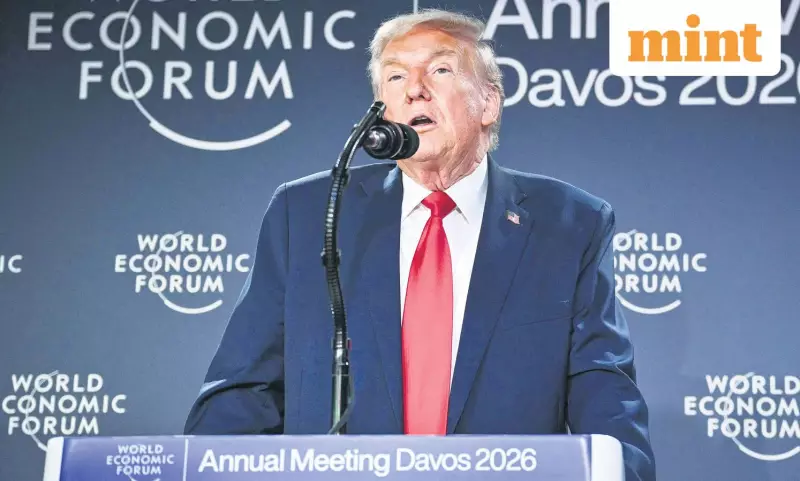
While President Macron offered a Eurocentric perspective, and Prime Minister Carney delivered a broad appeal for global cooperation, President Trump's address stood out for its "America First" rhetoric and imperialist undertones. Trump's speech, consistent with his administration's unilateral approach, emphasized US-centric priorities with characteristic swagger, drawing criticism from other Western leaders.
Carney, speaking a day before Trump, delivered perhaps the most significant warning, describing the current global situation not as a transition but as a "rupture"—the end of pleasant fiction and the beginning of harsh reality where great power geopolitics faces fewer constraints.

The Illusion of American Invulnerability
As Carney pointed out, the United States might be attempting to weaponize economic integration and use financial infrastructure for coercion, but this strategy overlooks America's own vulnerabilities. Much of America's ability to exert economic pressure stems from what economists call the "exorbitant privilege" of the US dollar's status as the global reserve currency.
This privilege allows the United States to live beyond its means, financing its profligacy through dollar printing and issuing low-interest Treasury bills that foreign investors accumulate. However, this arrangement creates mutual dependency rather than unilateral control.
The Reality of Economic Interdependence
As of November 2025, foreign investors held approximately one-third of all US Treasuries by value, with nearly 40% of this held by just five countries: Japan, the United Kingdom, China, Canada, and Belgium. A significant reduction in their appetite for US debt could trigger bond market volatility, drive up American interest rates, and slow the US economy.
Moreover, America's relative economic dominance is steadily declining. According to International Monetary Fund projections for 2026, the combined share of world GDP (in purchasing power parity terms) for the European Union, China, and India has risen to 42.3%, up from 36.3% in 2000. Meanwhile, the US share has fallen to just 14.5% from 20.4% over the same period.
A Wake-Up Call for Global Solidarity
Carney's message, though delivered in the context of "middle powers like Canada," carried implications for the entire world. He emphasized that other nations are not powerless and possess the capacity to build a new international order based on values like:
- Respect for human rights
- Sustainable development
- International solidarity
- Sovereignty and territorial integrity
The temporary relief some felt after Trump walked back threats regarding Greenland and punitive tariffs should not breed complacency. The US administration has placed the global economic order at genuine risk, and as Carney suggested, the world must heed this wake-up call and stand together.
The emerging economic powerhouses of China and India further ensure that American hegemony over the global economy will continue to weaken. The rest of the world possesses more collective power than unilateralist approaches assume, and the future of global economic stability may depend on recognizing this interdependence rather than testing it through coercion.