

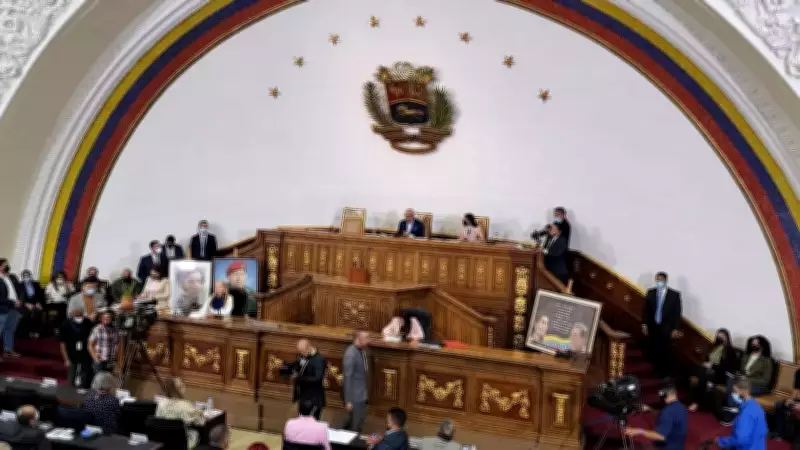
In a historic shift, Venezuela's National Assembly has approved legislation on Thursday that fundamentally restructures the country's oil sector, opening it to private companies for the first time in over two decades. This move reverses a long-standing policy of strict state control that has defined the industry since its nationalization.
A Watershed Moment for Venezuela's Economy
The vote comes less than a month after the dramatic seizure of then-President Nicolás Maduro in a US military operation in Caracas. The newly passed law now awaits the signature of acting President Delcy Rodríguez, who championed these changes shortly after US President Donald Trump announced his administration's intention to take control of Venezuela's oil exports and actively seek foreign investment.
Key Provisions of the Reformed Oil Legislation
The revised law introduces several transformative measures designed to attract international capital and expertise. Private companies will now be permitted to control both oil production and sales, a significant departure from the previous state monopoly. Additionally, the legislation allows for disputes to be resolved through independent arbitration, moving away from the exclusive jurisdiction of Venezuelan courts.

A draft of the legislation outlines changes to extraction taxes, with royalties now capped at 30 percent. The government retains the ability to adjust rates for individual projects based on specific investment needs and competitiveness factors, providing a degree of flexibility to negotiate favorable terms.
Government's Rationale and Political Reactions
Rodríguez's administration asserts that these reforms are primarily aimed at reassuring foreign oil companies, particularly US firms that suffered significant asset losses when the industry was nationalized two decades ago in favor of the state-run oil giant PDVSA.
Ruling party lawmaker Orlando Camacho hailed the reform as a game-changer, stating it "will change the country's economy." Opposition lawmaker Antonio Ecarri expressed support for the move but emphasized the need for greater transparency and accountability. "Let the light shine on in the oil industry," he urged, calling for public disclosure of all funding arrangements and contracts.
Historical Context and Economic Imperatives
The oil law was last comprehensively overhauled under former president Hugo Chávez, who made state control a cornerstone of his socialist agenda. Since that time, a combination of falling global oil prices, chronic mismanagement, and international sanctions has severely weakened PDVSA and exacerbated Venezuela's profound economic crisis.
This legislative reform represents a pragmatic pivot, acknowledging the urgent need for foreign investment and technological expertise to revitalize a sector that has long been the lifeblood of Venezuela's economy. The success of this policy shift will depend on its implementation and the international community's response to these newly opened opportunities.






