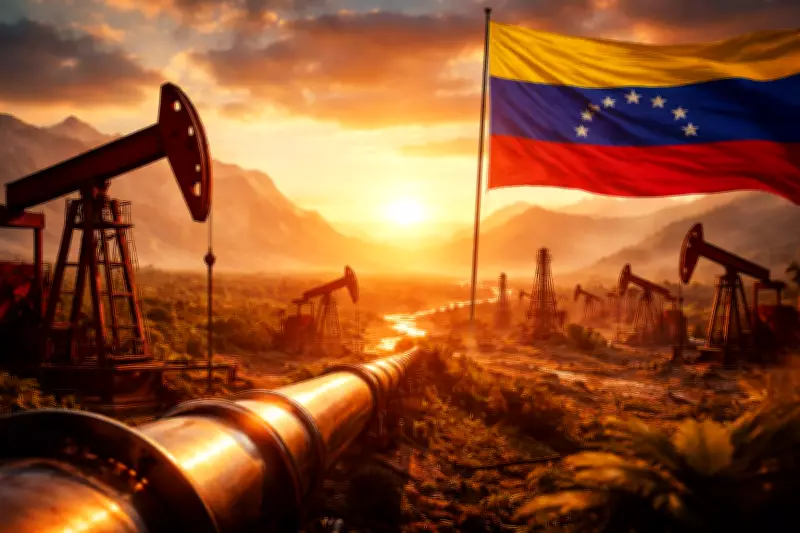
Venezuela's Geological Fortune: The World's Largest Oil Reserves
Venezuela officially possesses the world's largest proven oil reserves, holding approximately 303 billion barrels of crude oil. This staggering figure represents roughly 17 percent of the global total, positioning the South American nation as a geological powerhouse in the energy sector. The vast majority of these reserves are concentrated in the Orinoco Belt, where the oil is characterized by unusual density and heaviness.
The Geological Formation of Venezuela's Oil Wealth
The extraordinary size of Venezuela's oil reserves is a direct result of unique geological processes that unfolded over millions of years. Deep in the southern and eastern regions of the country lies the expansive Orinoco Belt, a massive sedimentary rock formation containing enormous quantities of organic material that was gradually buried and compressed into hydrocarbons.
According to geological studies, including research titled "A river-dominated to tide-dominated delta transition: A depositional system case study in the Orinoco heavy oil belt, Eastern Venezuelan Basin," tectonic movements between the Caribbean and South American plates caused significant subsidence in eastern Venezuela. This created a deep natural basin that functioned like a colossal geological bowl, allowing thick layers of sediment to accumulate over eons.

Rivers flowing from the rising Andes mountains transported immense volumes of sand, mud, and organic matter into this basin, contributing to the formation of exceptionally thick, oil-rich layers that eventually became today's reservoirs. Repeated fluctuations in sea levels further preserved this buried organic material, as shallow marine environments created low-oxygen conditions that prevented complete decay, leaving more material available for hydrocarbon generation.
Structural geological features, including faults and traps caused by tectonic forces, played a crucial role in containing the oil once it was generated, effectively sealing vast quantities of hydrocarbons in place. Most of Venezuela's reserves consist of extra-heavy crude oil—exceptionally dense and viscous material that presents significant extraction and refining challenges, yet still qualifies as proven reserves under international standards.
The Production Paradox: Reserves Versus Reality
Despite possessing the world's largest oil reserves, Venezuela has struggled to translate this geological wealth into sustained production or economic stability. The country's oil output has declined dramatically from peak production levels, with physical infrastructure becoming increasingly outdated and inefficient.
Technical and Economic Challenges
The nature of Venezuela's oil presents substantial technical hurdles. The extra-heavy crude requires specialized equipment, blending with lighter hydrocarbons, and complex refining processes before it can be marketed internationally. This makes extraction and processing considerably more expensive compared to lighter crude grades that are easier and cheaper to handle.
Luisa Palacios, an adjunct senior research scholar at Columbia University's Center on Global Energy Policy, highlighted this disparity in a recent analysis. Venezuela once produced approximately 3.7 million barrels per day in the late twentieth century, but current production has plummeted to around 1 million barrels daily—a mere fraction of the country's theoretical capacity and a minuscule share of global output.
Infrastructure and Institutional Limitations
Decades of systematic underinvestment, poor management practices, and international sanctions have severely weakened Venezuela's oil infrastructure. Pipelines, wells, and refineries are operating far below capacity, requiring extensive repairs and technological upgrades to restore functionality.
International sanctions have further compounded these challenges by restricting Venezuela's access to global markets, financing opportunities, and advanced technologies. These restrictions have suppressed production levels and discouraged new investment in the sector, creating a vicious cycle of declining output and deteriorating infrastructure.

The Disconnect Between Underground Reserves and Economic Wealth
The enormous reserve figures reported by Venezuela reflect geological reality rather than economic prosperity. Because much of the oil remains trapped underground—unable to reach refineries and export markets—the reserve tally does not correspond to strong production or export performance.
The technical and economic challenges associated with producing and refining heavy crude mean that Venezuela's reserve numbers remain exceptionally high even while actual oil wealth flowing into the national economy remains severely limited. This creates a profound disconnect between the country's underground geological assets and its above-ground economic reality.
While Venezuela's oil reserve numbers continue to command global attention according to official statistics, the nation's actual production capacity and export earnings have been constrained by a complex interplay of technical limitations, financial constraints, and institutional challenges in recent years. The geological factors that created this extraordinary resource base now stand in stark contrast to the practical difficulties of transforming those reserves into sustainable economic benefits.