World Economic Forum 2026 Concludes with Record Participation and Focus on AI
The five-day annual meeting of the World Economic Forum concluded on Friday, January 23, in Davos, Switzerland, marking the end of a significant gathering of global leaders. The 56th Annual Meeting brought together an impressive assembly of nearly 3,000 leaders from government, business, civil society, and academia under the theme “A Spirit of Dialogue.” This event unfolded against what organizers described as the most complex geopolitical backdrop witnessed in decades.
Record Attendance and High-Level Participation
According to official releases from the World Economic Forum, the 2026 edition saw unprecedented participation levels. A remarkable total of 64 heads of state or government attended the event, underscoring its global importance. The forum welcomed close to 3,000 leaders from 130 different countries, representing diverse regions, sectors, and generations.
Notable statistics from the attendance include:

- A record 400 top political leaders
- A majority of G7 leaders
- Approximately 830 of the world's top CEOs and board chairs
- Almost 80 leading unicorn companies and technology pioneers
Elon Musk Makes His Davos Debut
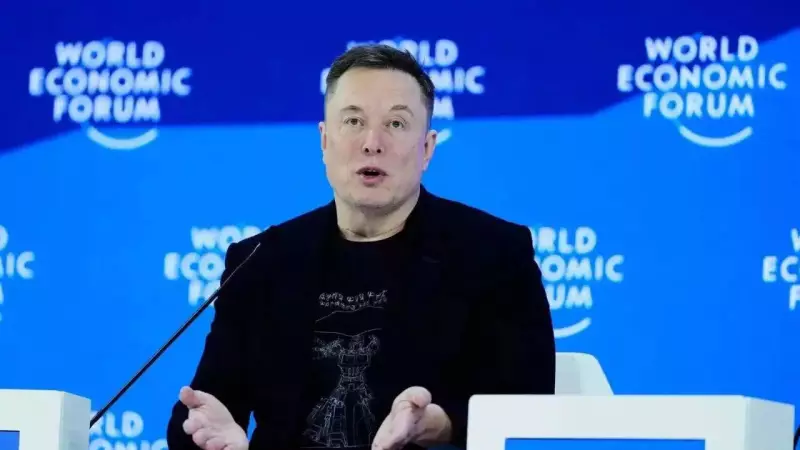
The 2026 forum marked the highly anticipated debut of Tesla CEO Elon Musk at the World Economic Forum. After years of publicly criticizing the annual meeting as elitist, unaccountable, and disconnected from ordinary people, the world's richest man participated in a wide-ranging interview conducted by Larry Fink.
Fink, who serves as Interim Co-Chair of the World Economic Forum and CEO of BlackRock, expressed his admiration for Musk at the beginning of their discussion. The conversation covered diverse topics including the future of robotics and artificial intelligence, the economic benefits of reusable rockets, and Musk's childhood fascination with science fiction.
During his appearance, Musk offered critiques of US solar tariffs and outlined aggressive targets for Tesla, including plans for humanoid robot sales in the coming year. He also indicated that European approval for Tesla's self-driving technology could be expected within weeks.
Leadership Perspectives on Global Challenges
In his closing remarks, Larry Fink shared an optimistic perspective by quoting Elon Musk: “It's better for your quality of life to be an optimist who's wrong than a pessimist who's right.” This sentiment echoed throughout the forum's concluding sessions.
WEF President and CEO Borge Brende emphasized the current global moment during the closing session, stating: “This is a moment of uncertainty, but also possibility; not a moment to retreat, but a moment to engage.”
Andre Hoffmann, WEF's Interim Co-Chair and Vice Chairman of Roche Holding, reflected on the forum's impact: “This year, Davos has reached a new level. Not only was it the intended platform for dialogue, but it also marked turning points and drove decisions.”
Artificial Intelligence Takes Center Stage
A dominant theme throughout WEF 2026 was the transformative power of artificial intelligence and emerging technologies. Discussions highlighted how these innovations are fundamentally reshaping every industry sector and the global labor market, driving profound changes in skill requirements and entire professions across both advanced and emerging economies.
CEOs from various regions presented practical strategies for deploying AI on complex, mission-critical tasks and for driving long-term organizational transformation. The focus was on actionable insights for redesigning capabilities, decision-making processes, and operating models to unlock AI's full enterprise value.
Tech Leaders Share Vision for AI's Future
Prominent technology executives offered compelling perspectives on artificial intelligence's role in global development:
Jensen Huang, Chief Executive Officer of Nvidia, advocated for developing nations: “I would advocate for the developing countries: build your infrastructure, get engaged in AI and recognize that AI is likely to close the technology divide.”

Satya Nadella, Chairman and CEO of Microsoft, emphasized practical applications: “Right now, the Zeitgeist is a little bit about the admiration for AI in its abstract form or as a technology. But, I think we as a global community have to get to a point where we're using this to do something useful that changes the outcomes of people and communities and countries and industries.”
Sarah Friar, Chief Financial Officer of Open AI OpCo, highlighted existing capabilities: “The capability overhang [of AI] is massive. Even if models [did not improve at all] from today, there is still so much productivity to be had just with what’s in people’s hands.”
The 2026 World Economic Forum successfully created a platform for crucial dialogues about global challenges while emphasizing technological innovation as a driving force for economic transformation and development across nations.