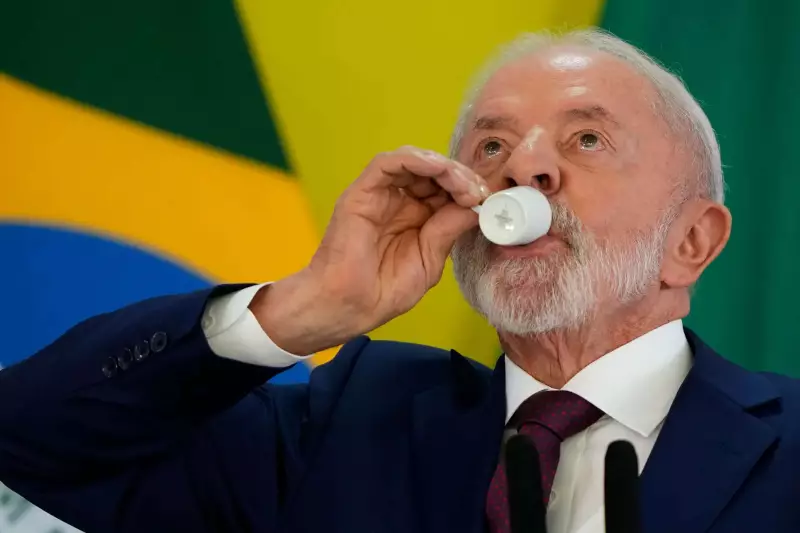
Brazilian President Luiz Inacio Lula da Silva expressed hope on Saturday that the long-awaited free-trade agreement between the South American trade bloc Mercosur and the European Union will finally be signed in January. This comes after a last-minute delay this weekend, scuttling plans for an immediate signature.
Why the Historic Deal Faces Another Delay
The signing ceremony, which was anticipated to take place in Brazil this weekend, was postponed following a tense EU summit on Friday. European Commission President Ursula von der Leyen announced the deal would be delayed for "a few extra weeks to address some issues with member states." The primary roadblocks are widespread protests by European farmers and political opposition led by France and Italy.
President Lula, speaking at a Mercosur summit in the Brazilian city of Foz do Iguacu, revealed that the meeting of South American leaders was convened because European negotiators had previously signalled their readiness to sign. "That did not happen," Lula stated, attributing the holdup directly to a request for more time from Italian Premier Giorgia Meloni.

The Political Calculus in Europe
For the deal to proceed, Ursula von der Leyen requires the backing of at least two-thirds of the EU's member nations. Italy's firm opposition is crucial, as it would provide France with enough support to form a blocking minority and veto the agreement. French President Emmanuel Macron, speaking at the EU summit on Thursday, refused to commit to supporting the deal next month.
Macron confirmed he has been in discussions with his Italian, Polish, Belgian, Austrian, and Irish counterparts about delaying the pact to better address the mounting concerns of European farmers, who fear being undercut by imported agricultural goods. However, Lula countered that Macron alone cannot block the agreement, emphasising the need for broader political consensus.
Lula's Call for Political Will and Mercosur's Alternative Path
Expressing frustration over the 26-year negotiation timeline, Lula told fellow leaders, "Without political will and courage from leaders, it won't be possible to finish a negotiation that has dragged for 26 years." He confirmed receiving a letter from EU leadership aiming for a January deal and having spoken with Premier Meloni on Friday.
While committed to the EU pact, Lula signalled that Mercosur is not putting all its eggs in one basket. "Meanwhile, Mercosur will continue to work with other partners," he declared. "The world is eager to make deals with Mercosur. Many countries want that." He added confidently that deals not finalised during his presidency of the bloc, which ends in December, would be completed.
The stakes are enormous. If signed, the EU-Mercosur trade deal would create a combined market of 780 million people and cover a quarter of the global GDP. It aims to progressively eliminate tariffs on nearly all goods traded between the two blocs. The agreement involves the five active Mercosur nations: Brazil, Argentina, Uruguay, Paraguay, and Bolivia.
As the deadline shifts to January, the world watches to see if political will can finally overcome decades of negotiation and recent agricultural unrest to cement one of the world's most significant trade partnerships.