A landmark free-trade agreement between the European Union and South America's Mercosur bloc, negotiated for nearly a quarter of a century, is now on the brink of collapse. According to an AP report, last-minute opposition from France and escalating protests by European farmers have thrown the deal's future into serious doubt, raising fresh questions about whether it can be signed before the end of this year.
Farmers' Fury and French Veto Threaten Timeline
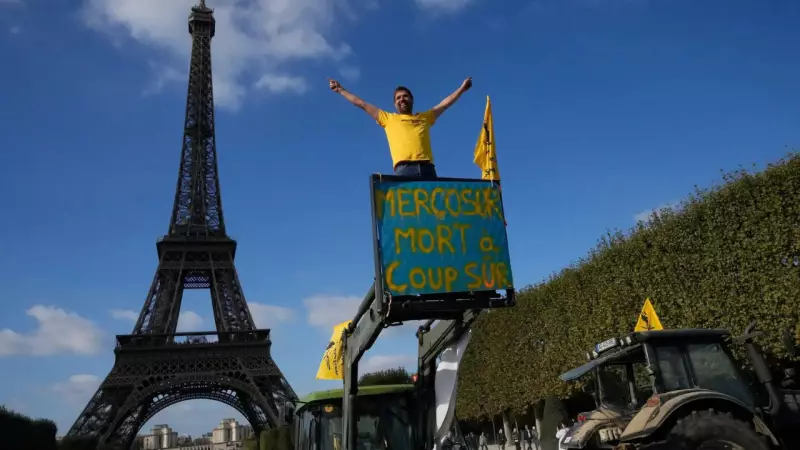
The timing of the crisis is critical. EU negotiators were hoping to finalise the agreement just as angry farmers, fearing an influx of cheaper agricultural imports and stiffer competition, took to the streets of Brussels. The deal, agreed in principle a year ago, involves the 27-nation EU and five Mercosur countries: Brazil, Argentina, Uruguay, Paraguay, and Bolivia. It aims to gradually eliminate tariffs on most goods traded between the two economic blocs over a span of 15 years.
Despite plans for European Commission President Ursula von der Leyen and European Council President António Costa to sign the pact in Brazil on December 20, growing resistance has put that schedule at risk. The accord still requires unanimous approval from all EU member states and the European Parliament.

In a decisive move, French Prime Minister Sébastien Lecornu declared the current deal "unacceptable" on Sunday, stating that the "conditions have not been met" for EU leaders to authorise its signing this week. This effectively seeks a delay that could push the final decision to 2026 or even later. While acknowledging some protective steps proposed by the European Commission, Lecornu confirmed France remains unconvinced.
The Core Conflict: Agriculture and Standards
At the heart of the dispute lies agriculture and a clash of regulatory standards. Analysts point out that nations like Poland, Austria, the Netherlands, and France worry that Mercosur exporters could severely undercut EU farmers. The latter operate under far stricter EU rules on labour, the environment, and food safety, including stringent restrictions on pesticide use.
France has been a leading voice demanding "mirror clauses" that would force Mercosur producers to adhere to the same high standards as their European counterparts—a demand that has not been fully accepted in negotiations. The EU is a major agricultural exporter, with farm goods worth 235.4 billion euros ($272 billion) shipped abroad in 2024. Critics warn the deal could devastate local dairy and beef producers and lead to environmental damage.
In response to the backlash, the European Commission has proposed several safeguards:
- A mechanism allowing farmers to trigger investigations if Mercosur imports are priced at least 10% below equivalent EU products.
- Tighter border inspections for banned pesticides.
- Reforms to distribute agricultural subsidies more equitably.
However, these measures have failed to placate French officials or calm the furious farmer unions, who are planning further demonstrations in Brussels as EU leaders meet later this week.
Broader Implications for EU's Global Stance
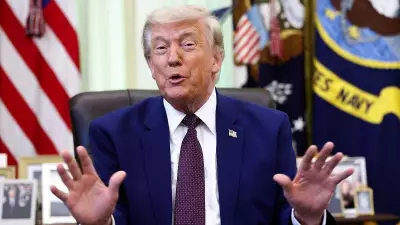
The stalemate has consequences far beyond this single agreement. Alicia Gracia-Herrero, a senior fellow at the Bruegel Institute in Brussels, warned that the impasse exposes the limits of the EU's political unity and global influence. "If we cannot get this done even with (US President Donald) Trump's pressure, what can you expect from the EU?" she questioned, cautioning that further delays could damage Brussels' credibility in ongoing trade talks with other major partners, including Indonesia and India.
The deal is strategically crucial for the EU, which has been actively seeking to diversify its trade relationships. This push gained urgency after Donald Trump imposed tariffs of 15% on most EU imports earlier this year. Brussels views the Mercosur pact as a vital strategic counterweight to the aggressive trade tactics employed by both the United States and China.

European Commission spokesperson Olof Gill emphasised the bloc is working hard to conclude the agreement by year-end, arguing it would significantly strengthen the EU's geopolitical standing. "We're talking about bringing together two of the world's biggest trading blocs," he said, highlighting potential cooperation on climate, economic security, and global rules.
Proponents of the deal argue it would save businesses approximately $4.26 billion in duties annually and open lucrative new markets for a wide range of products, from French wine and German pharmaceuticals to Brazilian minerals. Yet, as farmer protests intensify and political divisions deepen, a trade deal once seen as a cornerstone of EU strategy now faces its most formidable challenge yet.