Brazilian President Luiz Inácio Lula da Silva has expressed hope that the historic free-trade agreement between the South American bloc Mercosur and the European Union will finally be inked in January. This comes after yet another delay, with European opposition and farmer protests pushing back the signing that was anticipated this weekend.
Another Delay After Summit Hopes
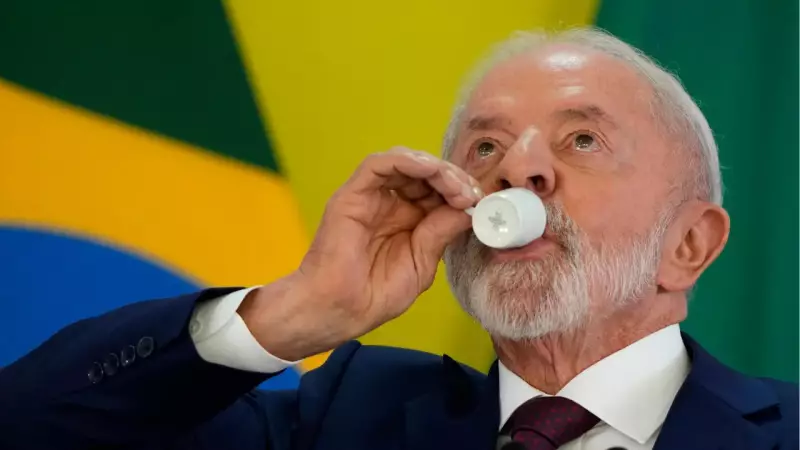
Speaking at a summit of South American leaders in Foz do Iguacu, located at the tri-border area of Brazil, Argentina, and Paraguay, Lula revealed the latest setback. He stated that European negotiators had initially indicated the agreement would be signed during this weekend's meeting, prompting the gathering of leaders. However, that did not materialise.
The delay was confirmed after Italian Prime Minister Giorgia Meloni requested more time, according to the Brazilian president. This aligns with a statement from European Commission President Ursula von der Leyen, who, following a tense EU summit, announced the signing would be postponed by "a few extra weeks" to address concerns from member states.

Political Will and a 26-Year Negotiation
President Lda Silva emphasised that he received a letter from EU leadership and spoke with PM Meloni on Friday, both indicating an intention to conclude the pact in January. However, he pointedly noted that the repeated postponements highlight a critical lack of political resolve.
"Without political will and courage from leaders, it won’t be possible to finish a negotiation that has dragged for 26 years," Lula told fellow leaders at the summit. He added that Mercosur would continue to engage with other global partners eager to make deals, signalling the bloc's alternatives if the EU agreement falters.
For the deal to proceed, Commission President von der Leyen requires backing from at least two-thirds of EU member states. Opposition from Italy could empower France to gather enough votes to block the signing, creating a significant political hurdle.
Farmers' Protests and Economic Stakes
The resistance is notably led by France, which has raised objections alongside the pact's other active Mercosur members: Argentina, Uruguay, Paraguay, and Bolivia. French President Emmanuel Macron stated at the EU summit that he would not commit to supporting the deal next month. He is reportedly in discussions with leaders from Italy, Poland, Belgium, Austria, and Ireland to delay it further, primarily to address European farmers' concerns about competition.
Despite this, Lda Silva asserted that President Macron alone cannot block the agreement. The stakes are undeniably high. If concluded, the EU-Mercosur deal would create one of the world's largest free-trade zones, encompassing a market of roughly 780 million people and about a quarter of global GDP. It would gradually eliminate duties on most goods traded between the two economic blocs.
"Let’s hope that things happen for the good of our Mercosur, multilateralism and the development of our countries," Lula concluded, reflecting on the protracted negotiations that have spanned over a quarter of a century.