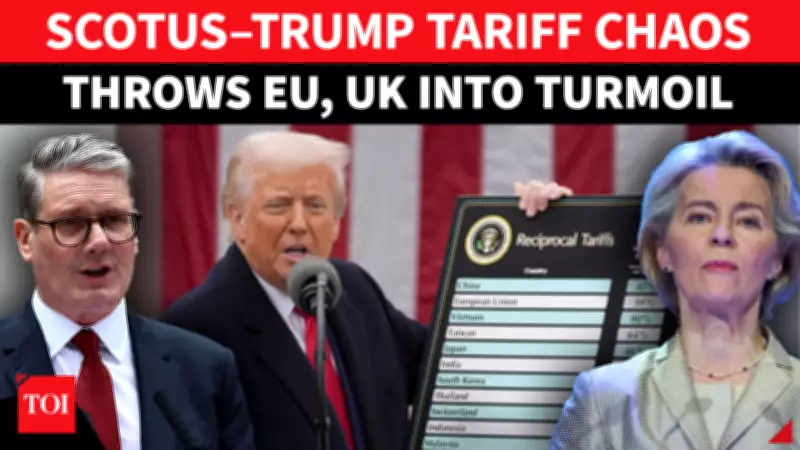
Europe Braces for Economic Shock as Trump's 15% Global Tariff Plan Sparks Market Panic
Global financial markets are reeling with heightened anxiety following the announcement by U.S. President Donald Trump of a proposed 15% tariff on all international imports. This aggressive trade policy has sent shockwaves across the Atlantic, placing European nations and the United Kingdom in a state of urgent concern and confusion. The potential implementation of these sweeping tariffs threatens to severely disrupt long-established transatlantic trade relationships and agreements.
Immediate Market Reaction and European Demands for Clarity
Stock markets in key European economic powerhouses, notably Germany and France, have already begun to slide in response to the uncertainty. Investors are reacting to the fear of impending trade barriers that could inflate costs and destabilize supply chains critical to continental industries. In a unified call for action, European political leaders and major trade organizations are demanding immediate and explicit clarification from Washington regarding the tariff's effective date and its implications for existing trade pacts.
The core of the confusion lies in whether this 15% levy will be enforced immediately and if previous bilateral and multilateral agreements will be honored or rendered obsolete. This lack of clear communication from the U.S. administration is creating a volatile environment for businesses that rely on predictable cross-border commerce.

Business Fears and the Specter of a Full-Blown Trade War
Corporate entities across Europe are expressing deep apprehension about the operational and financial repercussions. The enforcement of such a significant tariff could lead to substantial increases in the cost of imported American goods and components, thereby squeezing profit margins and potentially forcing price hikes onto consumers. More critically, it threatens to fragment intricate global supply chains that European manufacturers depend on for raw materials and finished products.
Beyond the immediate economic calculations, there is a growing political and legal storm. European capitals are facing mounting domestic pressure to shield their economies from what is perceived as an escalating American trade offensive. Legal experts are scrutinizing the proposal, questioning its compatibility with World Trade Organization rules and existing international law, adding another layer of complexity to the crisis.
Broader Implications and a Continent on Alert
The proposed tariff is not merely a policy shift; it represents a potential pivot point in global economic relations. Analysts warn that retaliatory measures from the European Union could trigger a full-scale trade war, damaging growth prospects on both sides of the Atlantic. The situation underscores the fragile interdependence of the modern global economy, where a single policy announcement can trigger widespread financial instability.
As the situation develops, Europe finds itself at a critical juncture, forced to prepare for significant economic fallout. The coming days will be crucial as diplomatic channels are activated to seek resolution, while businesses and governments alike brace for a new era of potentially more protectionist and confrontational international trade.