

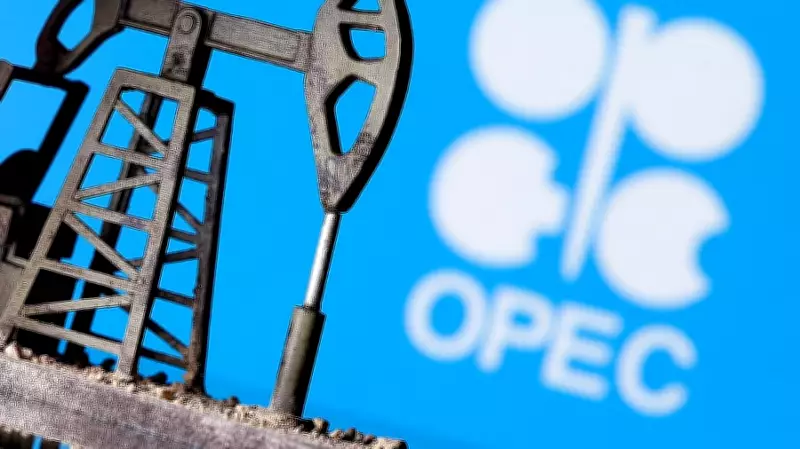
The United Arab Emirates' decision to exit the Organization of the Petroleum Exporting Countries (OPEC) has sent shockwaves through global energy markets, with far-reaching implications for the world economy. This move, coupled with the escalating United States-Israel war on Iran, has seriously dented the UAE's image as a safe haven for global trade, finance, and tourism in a troubled region.
A Strategic Shift in Energy Policy
The UAE's departure from OPEC marks a significant strategic shift in its energy policy. As one of the largest oil producers in the Middle East, the UAE has long been a key player within the cartel. However, recent geopolitical tensions and internal disagreements over production quotas have prompted Abu Dhabi to pursue an independent path. By exiting OPEC, the UAE gains greater flexibility to increase its oil output and maximize revenues, especially as global demand for energy remains high amid supply constraints.
This decision is expected to have a ripple effect on global oil prices. With the UAE no longer bound by OPEC's production caps, it can ramp up production, potentially leading to a surplus in supply. Analysts predict that this could drive down oil prices in the short term, benefiting import-dependent economies but straining the budgets of other OPEC members. The move also weakens OPEC's collective bargaining power, as the cartel loses one of its most influential members.

Geopolitical Ramifications
The UAE's exit cannot be viewed in isolation. It comes against the backdrop of heightened tensions between the United States, Israel, and Iran. The ongoing conflict has destabilized the region, disrupting shipping routes and threatening energy infrastructure. The UAE, which has positioned itself as a neutral hub for trade and finance, now faces increased risk. The war has already led to a decline in foreign investment and tourism, as global businesses reassess their exposure to the region.
Furthermore, the UAE's relationship with Saudi Arabia, its fellow OPEC member and regional ally, may come under strain. Riyadh has traditionally led OPEC's production decisions, and Abu Dhabi's unilateral move could be seen as a challenge to Saudi leadership. This rift may have broader implications for the Gulf Cooperation Council (GCC), potentially weakening collective security and economic integration.
Impact on Global Trade and Finance
The UAE has long been a magnet for international business, thanks to its stable political environment, world-class infrastructure, and business-friendly policies. However, the combination of its OPEC exit and the regional conflict is eroding this reputation. Investors are increasingly wary of the volatility, and several multinational corporations have begun diversifying their regional operations to Qatar or Saudi Arabia.
The financial sector, particularly Dubai's status as a global financial center, is also feeling the heat. The uncertainty surrounding the UAE's energy policy and its geopolitical alignment has led to capital outflows and a depreciation of the dirham. The tourism industry, a key pillar of the economy, has seen a sharp drop in arrivals, with many travelers opting for safer destinations.
Long-term Economic Prospects
In the long run, the UAE's exit from OPEC could accelerate its diversification efforts. By decoupling from the oil cartel, the country can focus on developing alternative energy sources, such as solar and nuclear power, as well as expanding its non-oil sectors like technology, logistics, and services. However, this transition will require significant investment and time, during which the economy may face headwinds.
The UAE's leadership remains confident that the benefits of independence outweigh the risks. By controlling its own production levels, the UAE can better respond to market dynamics and secure long-term revenue streams. Yet, the immediate fallout from the US-Israel-Iran conflict poses a serious challenge. The country must navigate these turbulent waters carefully to preserve its status as a safe haven in the Middle East.

Conclusion
The UAE's exit from OPEC is a landmark event with profound consequences for global energy markets, regional geopolitics, and the country's own economic future. While it offers opportunities for greater autonomy and diversification, it also exposes the UAE to new risks, particularly amid the ongoing war on Iran. The world will be watching closely as the UAE charts its new course, balancing ambition with stability in an increasingly volatile region.





