

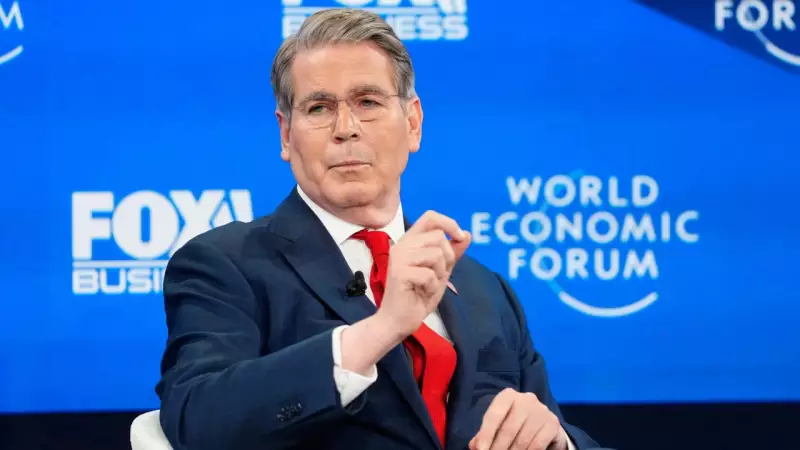
NEW DELHI: US Treasury Secretary Scott Bessent voiced his disappointment on Wednesday regarding Europe's decision to finalize a major trade agreement with India. He claimed that this move demonstrates the European Union's prioritization of commerce over the interests of the Ukrainian people, according to a Reuters report.
US Concerns Over Sanctions and Trade Priorities
Bessent alleged that European nations have been purchasing refined products from India, which are produced using sanctioned Russian oil supplies. He suggested that these countries were unwilling to align with Washington's stance because they were separately negotiating a trade pact with India. This criticism highlights ongoing tensions in global trade dynamics and sanctions enforcement.
Landmark India-EU Free Trade Agreement
The remarks come just a day after India and the European Union sealed a landmark free trade agreement. Prime Minister Narendra Modi and top EU leadership unveiled a comprehensive five-year agenda aimed at expanding trade and defence cooperation. This initiative is part of a broader push to protect a rules-based global order and strengthen bilateral ties.

PM Modi's Enthusiastic Endorsement
Prime Minister Modi described the India-EU pact as "historic," emphasizing its potential to accelerate the Atmanirbhar Bharat campaign and strengthen the resolve of 'Make in India, Make for the World'. He asserted that the agreement would open "countless opportunities" for India's youth, calling it a transformative moment for the nation's economy.
Addressing the NCC Rally
During his address at the annual National Cadet Corps PM rally in Delhi, PM Modi noted that the world is describing the agreement as the "mother of all deals" and a "game-changer." He stated that it would mean "freedom to aspire" for young Indians, particularly benefiting sectors in the creative economy such as:
- Film and entertainment
- Gaming and digital content
- Fashion and design
- Music and arts
Additionally, research, education, IT, and other professional services are expected to gain significantly from this deal.
Economic Impact and Market Access
The India-EU Free Trade Agreement is projected to create a combined market of nearly two billion people, representing approximately one-fourth of global GDP and one-third of world trade. As part of the summit, both sides also signed agreements on security and defence collaboration, as well as mobility for Indian talent to Europe.
Tariff Reductions and Sectoral Benefits
PM Modi highlighted that tariffs on more than 99% of India's exports to the EU would be eliminated or significantly reduced. This will benefit key sectors including:
- Textiles and leather goods
- Gems and jewellery
- Footwear and engineering products
The pact is expected to provide weavers, artisans, MSMEs, and small entrepreneurs with direct access to EU markets, fostering growth and innovation.
Investment and Job Creation Prospects
The agreement is anticipated to boost investment into India and lead to new manufacturing capacity in critical areas such as engineering, electronics, chemicals, and pharmaceuticals. It will also create stronger markets for agriculture, food processing, and fisheries. Modi added that the pact could open up job opportunities for Indian youth in all 27 EU countries, particularly in fields like:
- Engineering and green technology
- Design and logistics
- Advanced manufacturing
EU Member States Involved
The European Union members include major economies such as France, Germany, Italy, Spain, the Netherlands, Sweden, Austria, Belgium, and Denmark, among others. This diverse group of nations underscores the wide-reaching impact of the trade agreement.
The contrasting reactions from the US and Indian leadership highlight the complex geopolitical and economic implications of this significant trade deal, which is set to reshape global commerce and diplomatic relations in the coming years.






