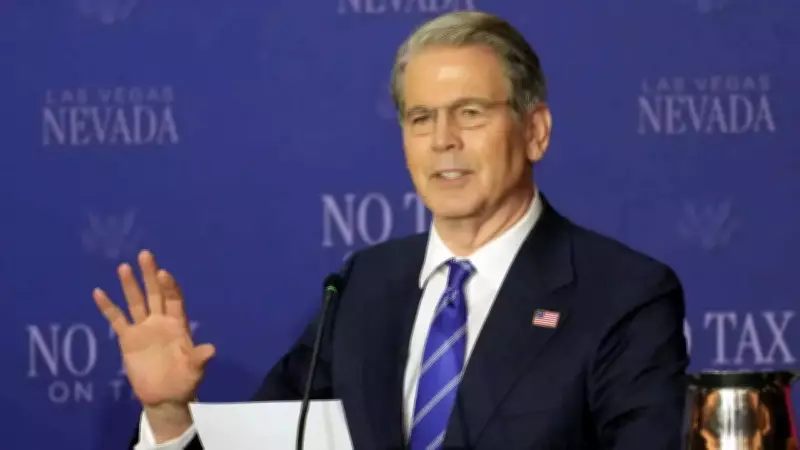
United States Treasury Secretary Scott Bessent stated on Friday that America does not plan to renew a waiver allowing the purchase of Russian oil currently at sea. In an interview with the Associated Press, Bessent also confirmed that a similar waiver for Iranian oil at sea is "totally off the table."
No Relief for Iran
"Not the Iranians. We have the blockade, and there's no oil coming out," Bessent said. He added, "And we think in the next two, three days, they're going to have to start shuttering production, which will be very bad for their wells."
Background of the Waiver
The US issued a waiver for Russian oil sales and petroleum products in March to stabilize global energy markets after crude oil prices surged above USD 100 per barrel due to the closure of the Strait of Hormuz amid tensions between Iran and the US.

Last week, the US decided to extend the sanctions waiver on Russian oil by issuing a fresh license allowing the purchase of Russian oil and petroleum products that had already been loaded onto ships as of that day. This arrangement remains in place until 12:01 am (0401 GMT) on May 16, replacing an earlier waiver that expired on April 11. The move came despite Bessent's recent signal that such relief would not continue. The Treasury Department renewed the waiver two days after Bessent stated at the White House that he had no plans to extend the sanctions relief.
Bessent's Explanation
In the AP interview, Bessent explained his previous change of heart and ruled out the possibility of renewing sanctions waivers for both Russia and Iran. He mentioned that during the World Bank and International Monetary Fund meetings last week, "More than 10 of the most vulnerable and poorest countries came to me and said, Can you help?"
"It was for those vulnerable and poor countries. But I wouldn't imagine that we'd have another extension. I think the Russian oil on the water has been largely sucked up," Bessent added.
Impact on Global Markets
The decision not to renew the waiver could have significant implications for global energy markets, particularly for countries that rely on Russian oil imports. The US continues to maintain a tough stance on sanctions against both Russia and Iran, aiming to limit their oil revenues.