

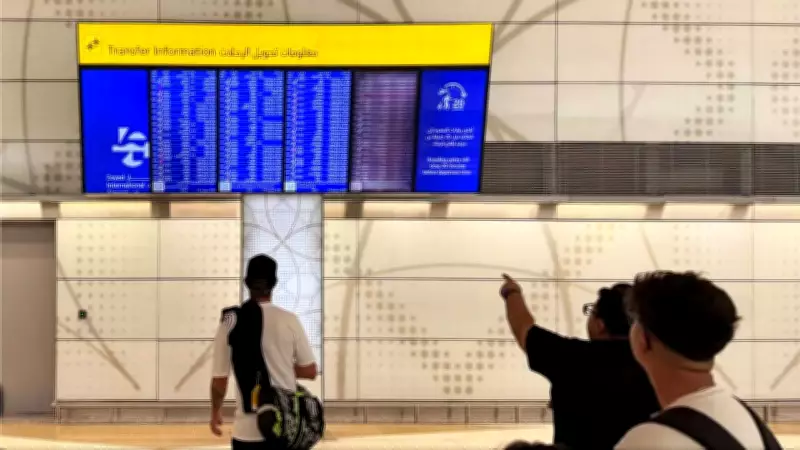
Abu Dhabi's Aviation Hub Cautiously Reopens After Severe Regional Disruptions
Following days of extensive travel chaos across the Middle East, Abu Dhabi's primary aviation gateway, Zayed International Airport, has initiated a carefully controlled resumption of limited flight operations. This development brings measured relief to thousands of passengers who found themselves stranded as regional airspace gradually begins to reopen. The restart comes after widespread flight suspensions triggered by escalating geopolitical tensions, which compelled numerous airlines to either halt services entirely or implement complex rerouting strategies, leaving major Gulf airports operating under stringent emergency protocols.
Coordinated Response and Resilience in Abu Dhabi's Aviation Sector
Airport authorities have confirmed that limited operations have recommenced at Zayed International Airport, executed in close coordination with the Emergencies, Crises and Disasters Management Centre (ADCMC). This meticulously planned reopening follows an intensive period of collaboration between aviation regulators, airline representatives, and various government agencies, all focused on ensuring passenger safety and operational preparedness. Officials have characterized this resumption as a significant demonstration of resilience within Abu Dhabi's aviation infrastructure, following a disruptive period marked by regional airspace closures.
The move signifies the initial phase of a gradual recovery process for one of the Gulf's most critical aviation hubs. However, authorities have been emphatic in stressing that operations remain strictly limited and are continuously subject to rigorous safety evaluations based on the evolving regional situation.

Extensive Support for Stranded Travelers During the Crisis
Throughout the period of disruption, Abu Dhabi authorities enacted comprehensive measures to assist travelers impacted by cancelled or severely delayed flights. In a substantial hospitality effort, more than 7,000 passengers were accommodated in over 4,300 complimentary hotel rooms across 74 different hotels within the emirate, as they awaited the resumption of travel services.
This large-scale support initiative reflected the government's overarching crisis-management strategy, designed to ensure that stranded individuals received necessary care and accommodation until flight operations could be safely restored. Officials reiterated that the paramount priority throughout the entire crisis has been the safety and wellbeing of passengers, airport personnel, and airline crew members.
Current Flight Operations Remain Highly Restricted
Despite the reopening, Zayed International Airport is not yet operating its standard commercial flight schedules. Presently, only a limited selection of flights—including aircraft repositioning services, essential cargo operations, and specific repatriation flights—are being permitted to operate under strict aviation oversight and safety protocols.
Across the broader Middle Eastern region, airlines have similarly resumed only select services following the massive disruptions triggered by regional conflict involving Iran, the United States, and Israel, which prompted multiple nations to close their sovereign airspace. Several major Gulf carriers have begun operating restricted services, primarily focused on repatriation efforts and essential travel, while regular passenger operations remain partially suspended.
The gradual reopening of airports across the United Arab Emirates, including key hubs in Dubai and Abu Dhabi, forms part of a coordinated regional effort to stabilize and restore aviation networks.
Critical Passenger Advisories and Ongoing Volatility
Airport authorities have issued clear and urgent advisories to all travelers: do not proceed to the airport without receiving explicit confirmation from your airline. Passengers holding confirmed tickets are strongly advised to contact their airline directly for the most current updates regarding flight schedules and precise departure timings before traveling to the airport.

Given the fluid and dynamic security environment, flight timings are subject to change with minimal notice, dependent entirely on airspace availability and prevailing safety conditions. The aviation crisis originated in late February following a significant escalation of regional hostilities, which led to widespread airspace closures across the Middle East, severely impacting major travel hubs such as the UAE, Qatar, and Kuwait.
Long-Term Impact and Cautious Path to Recovery
The conflict has disrupted thousands of flights globally and stranded travelers worldwide, forcing airlines to cancel services and reroute aircraft across vast distances. Even in areas where operations have tentatively resumed, many carriers are relying on specially designated safe corridors and highly restricted flight paths to navigate the region securely.
For Abu Dhabi, the reopening of limited flight operations at Zayed International Airport represents a crucial initial step toward reestablishing vital aviation connectivity. Nevertheless, officials emphasize that a full return to normal flight schedules is entirely contingent upon the evolving security landscape and regional airspace conditions. For the present moment, the controlled resumption of flights provides a critical lifeline for stranded passengers and signals the beginning of a cautious, measured recovery for Gulf aviation following one of the region's most disruptive travel crises in recent memory.





