

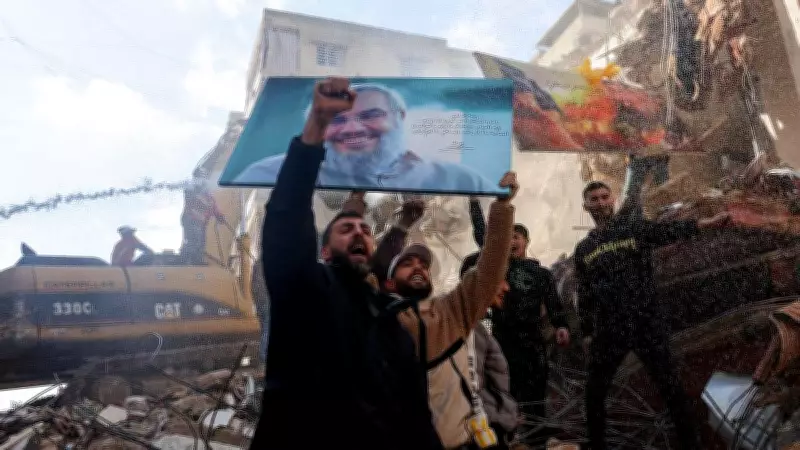
Hezbollah's Renewed Hostilities with Israel Defy Notions of Militant Group's Weakness
In a significant development in the Middle East, Hezbollah has initiated a new conflict with Israel, directly challenging the widespread notion that the militant group was severely weakened or crippled. This escalation comes amid ongoing diplomatic efforts, with Israeli Prime Minister Benjamin Netanyahu stating that Israel will continue to target Hezbollah even as it opens talks with the Lebanese government on disarming the organization.
Netanyahu's Dual Strategy: Military Strikes and Diplomatic Engagement
Prime Minister Netanyahu emphasized a two-pronged approach in response to Hezbollah's actions. On one hand, he affirmed that Israel would persist with military strikes against Hezbollah targets, underscoring a commitment to national security. On the other hand, he revealed that Israel is engaging in discussions with the Lebanese government to explore pathways for disarming Hezbollah, highlighting a simultaneous diplomatic push to address the root causes of the conflict.
Hezbollah's Resilience and Strategic Posturing
Hezbollah's ability to launch a new war with Israel has surprised many analysts who had previously speculated that the group was in a weakened state due to various regional pressures and internal challenges. This defiance not only showcases Hezbollah's continued military capabilities but also its strategic resilience in the volatile Middle Eastern landscape. The group's actions are seen as a bold statement of its enduring influence and operational strength.

Implications for Regional Stability and International Relations
The renewed hostilities between Hezbollah and Israel have significant implications for regional stability, potentially exacerbating tensions in an already fraught area. The involvement of the Lebanese government in disarmament talks adds a complex layer to the situation, as it navigates between domestic political dynamics and international pressures. This conflict could impact broader Middle East geopolitics, including relations with Iran, which has historically supported Hezbollah.
Historical Context and Future Outlook
This new war marks another chapter in the long-standing animosity between Hezbollah and Israel, with past conflicts having shaped the current geopolitical realities. As of April 11, 2026, the situation remains fluid, with international observers closely monitoring developments. The outcome of the disarmament talks and the intensity of military engagements will likely determine the short-term trajectory, while the long-term resolution hinges on broader diplomatic efforts and regional cooperation.






