

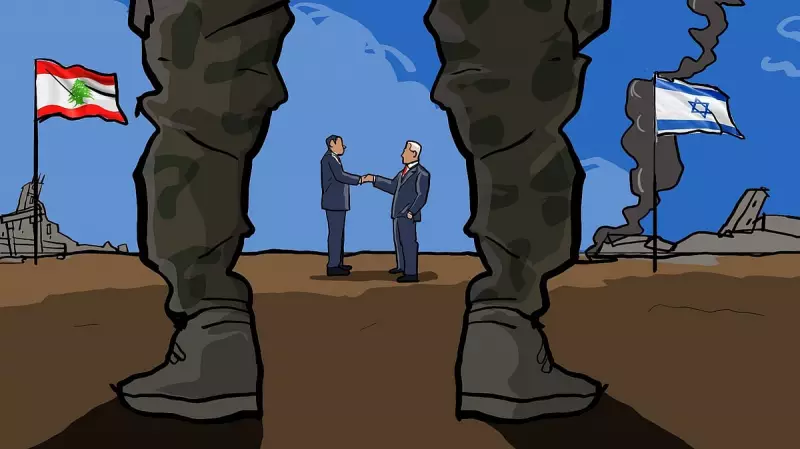
The Lebanese militant group Hezbollah remains a potent force, defiantly resisting international calls for complete disarmament. This stance, analysts warn, significantly heightens the risk of a return to full-scale war with neighbouring Israel. The situation underscores the fragile and volatile security landscape in the Middle East.
A Defiant Stance on Disarmament
Despite facing considerable pressure, Hezbollah has not acquiesced to demands that it lay down its arsenal. The group, which holds substantial political power within Lebanon, continues to maintain its military wing. This position is a central point of contention and a major obstacle to lasting stability on the Israel-Lebanon border. The group's refusal to disarm is seen as a direct challenge to United Nations Security Council Resolution 1701, which ended the 2006 war.
The ongoing deadlock over weapons creates a persistent flashpoint. Israeli officials have repeatedly stated they will not tolerate a heavily armed Hezbollah presence on their northern frontier. The militant group, for its part, frames its military capability as essential resistance against Israeli aggression and a necessary deterrent.

Escalating Tensions and the Spectre of War
The current impasse carries the very real danger of miscalculation and escalation. Skirmishes and cross-border incidents, though contained for now, could quickly spiral into a broader confrontation. Military analysts point to the extensive rocket arsenals held by Hezbollah and Israel's advanced defence systems, painting a picture of a potential conflict with devastating consequences for both nations, especially for civilian populations in Lebanon and northern Israel.
The last major conflict between Hezbollah and Israel occurred in 2006, resulting in significant casualties and destruction. The memory of that war looms large, but the geopolitical dynamics have shifted since, with Hezbollah gaining more combat experience in regional conflicts like Syria. This has arguably made the group a more formidable and battle-hardened adversary.
Regional Implications and the Path Forward
The standoff is not an isolated issue but is deeply intertwined with broader regional power struggles, particularly involving Iran, Hezbollah's primary patron. The group's strength and actions are a key component of Tehran's strategic influence in the Levant. Consequently, any escalation between Hezbollah and Israel has the potential to draw in other regional actors, complicating diplomatic efforts.
Finding a peaceful resolution requires addressing the core grievances and security concerns of all parties. This includes:
- Diplomatic engagement: Renewed and sustained international mediation is crucial.
- Border demarcation: Progress on settling the disputed land and maritime borders between Lebanon and Israel.
- Lebanese sovereignty: Strengthening the state's authority over its entire territory, a long-standing challenge given Hezbollah's autonomous military power.
As of 22 December 2025, the situation remains tense and unresolved. While Hezbollah may be facing political and economic pressures within a struggling Lebanon, its military arm is far from being neutralised. The group is down in the court of international public opinion and under constant threat, but it is certainly not out. The world watches anxiously, hoping diplomacy can avert another ruinous war.






