Modi and Luxon Call for De-escalation in Middle East
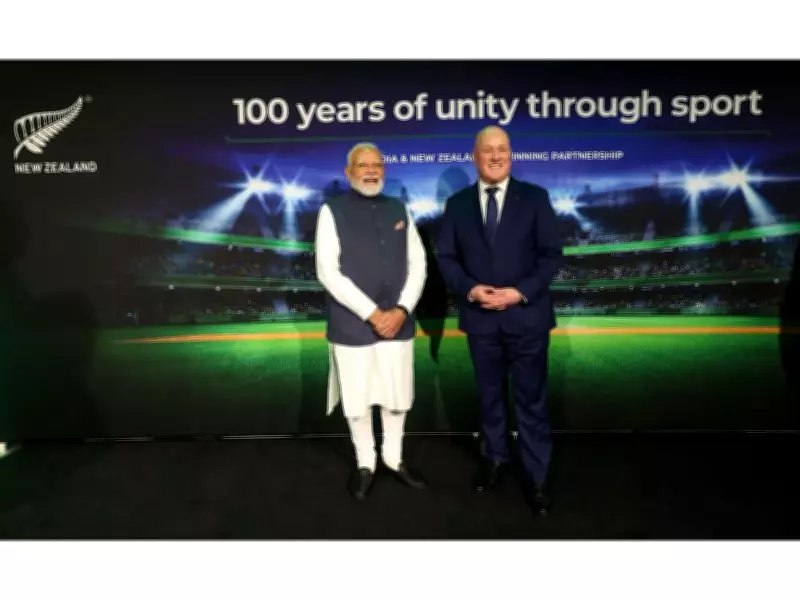
Prime Minister Narendra Modi and New Zealand Prime Minister Christopher Luxon on Saturday expressed deep concern over the renewed escalation of tensions in the Middle East. In a joint statement issued by India's Ministry of External Affairs, the leaders urged all parties to exercise restraint, de-escalate tensions, and ensure the protection of civilians.
Freedom of Navigation and Global Commerce
The two prime ministers called for the full restoration of freedom of navigation and the unimpeded global flow of commerce through the Strait of Hormuz. They opposed any constraints on shipping and emphasized the importance of dialogue, diplomacy, and adherence to international law to achieve a peaceful and lasting solution to the conflict.
Commitment to a Free and Open Indo-Pacific
Modi and Luxon exchanged views on their respective approaches to the Indo-Pacific and reaffirmed their commitment to a free, open, peaceful, and prosperous region where sovereignty and territorial integrity are respected. They reiterated the importance of upholding the rules-based international order, including freedom of navigation and overflight, in accordance with international law, particularly the 1982 United Nations Convention on the Law of the Sea (UNCLOS). Both sides stressed the need for peaceful resolution of disputes based on international law, especially UNCLOS.

Cooperation in Regional Fora
The leaders noted the importance of cooperation in ASEAN-led and other regional forums, such as the East Asia Summit, the ASEAN Regional Forum, and the ASEAN Defence Ministers' Meeting Plus. They reaffirmed ASEAN centrality and the ASEAN Outlook on the Indo-Pacific as key frameworks for regional engagement.
Support for UN Reform and India's Permanent Membership
Both prime ministers emphasized the need for an effective multilateral system centered on the United Nations. They called for bold and effective UN reform, including expansion of the Security Council in both permanent and non-permanent categories to reflect contemporary geopolitical realities. New Zealand reaffirmed its support for India's permanent membership in a reformed and expanded UN Security Council, according to the statement.
Strengthening Bilateral Ties
The leaders welcomed the increasing momentum of high-level political engagement and agreed to hold regular reciprocal visits and meetings between the respective prime ministers and ministers, including on the sidelines of regional and multilateral events. To provide strategic guidance under the Roadmap to 2030, they agreed to establish a regular Foreign Ministers' Dialogue and consolidate annual senior officials' meetings between India's Ministry of External Affairs and New Zealand's Ministry of Foreign Affairs and Trade.
Parliamentary Exchanges and Democratic Foundations
The prime ministers acknowledged the important contribution of parliamentary exchanges to deepening mutual understanding and strengthening the democratic foundations of the bilateral relationship. They encouraged regular engagement between the parliaments of both countries, including through the recently constituted Parliamentary Friendship Group for New Zealand in the Indian Parliament and visits by members of parliament.