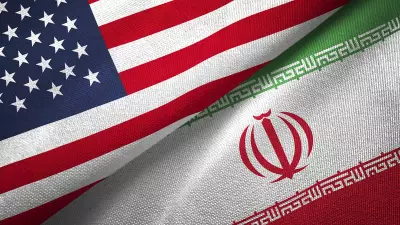
Iran has blamed the United States for the latest exchanges of fire with Israel, with a senior Iranian official accusing Washington of complicity. Esmaeil Baghaei, a spokesperson for Iran's Foreign Ministry, stated that Israel's actions in Lebanon, whether carried out with US knowledge and consent or not, were aimed at sabotaging diplomatic efforts.
Iran's Accusation Against the United States
Baghaei's remarks came during a press briefing held in Tehran on Monday. He asserted that the United States bears responsibility for the escalation of tensions in the region. 'The United States cannot distance itself from the consequences of Israel's aggressive actions,' Baghaei said. 'Whether these operations were conducted with direct US approval or merely tolerated, Washington is an accomplice.'
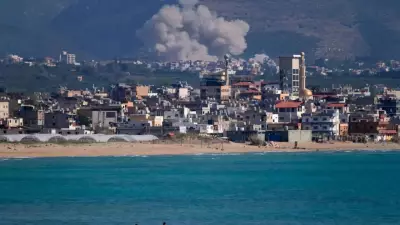
The Iranian official specifically pointed to recent exchanges of fire along the Israel-Lebanon border, which have raised fears of a broader conflict. He claimed that Israel's military operations in Lebanon were designed to undermine ongoing diplomatic initiatives and destabilize the region further.

Context of the Exchanges of Fire
The latest round of hostilities began last week when Israeli forces targeted what they described as Iranian-linked positions in southern Lebanon. In response, Hezbollah, the Iran-backed militant group, launched rocket attacks into northern Israel. The cross-border fire has resulted in casualties on both sides and prompted international calls for restraint.
Baghaei emphasized that Iran supports diplomatic solutions but warned that continued aggression would be met with a firm response. 'Iran will not hesitate to defend its interests and allies,' he added.
US Response and Regional Implications
The United States has not officially responded to Iran's accusations. However, US officials have previously stated that they were not involved in the Israeli operations. The Biden administration has been engaged in diplomatic efforts to de-escalate tensions in the region, including indirect talks with Iran over its nuclear program.
Analysts suggest that Iran's public blame of the US may be an attempt to shift focus from its own role in supporting Hezbollah and other militant groups. The exchanges of fire come at a time of heightened sensitivity, as negotiations over Iran's nuclear activities continue in Vienna.
International Reactions
The United Nations has called for an immediate ceasefire and urged all parties to exercise maximum restraint. UN Secretary-General António Guterres expressed deep concern over the escalating violence and warned of the potential for a wider conflict. 'The recent exchanges of fire are extremely dangerous,' Guterres said in a statement. 'We urge all sides to return to diplomatic channels.'
European Union foreign policy chief Josep Borrell also condemned the violence and called for de-escalation. He stressed the need for all parties to respect international law and avoid actions that could further destabilize the region.
Conclusion
As tensions remain high, the international community continues to monitor the situation closely. Iran's accusation against the United States adds another layer of complexity to an already volatile region. The coming days will be critical in determining whether diplomatic efforts can prevent a full-scale conflict.