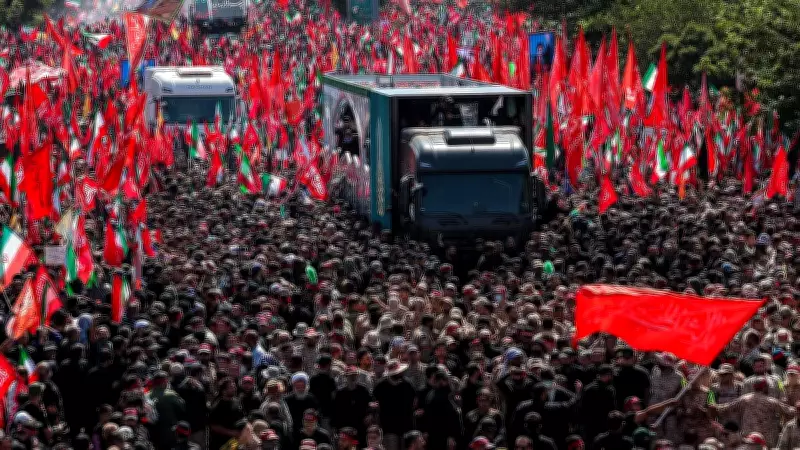
The funeral of Ayatollah Ali Khamenei became a defiant display of Iran's resilience against U.S. and Israeli strikes, projecting strength and unity while leveraging regional power. The event highlighted Tehran's strategic use of the Strait of Hormuz as a bargaining chip, prioritizing political legitimacy over economic gains in ongoing negotiations.
Defiant Show of Unity
The funeral procession drew massive crowds, with mourners chanting anti-U.S. and anti-Israel slogans. According to Iranian state media, the turnout was intended to demonstrate national solidarity after recent military strikes by the United States and Israel. Analysts noted that the event served as a platform for Iran to project its military and political resilience.
Strategic Leverage Over Hormuz
Iran is deliberately using its control over the Strait of Hormuz, through which a fifth of the global oil supply passes, as a key bargaining chip. The leadership is prioritizing political legitimacy over economic gains, slowing nuclear talks to secure strategic gains around the strait before making concessions. This approach has given Tehran confidence that it can extract concessions from Washington without yielding on key demands.

Slow-Paced Negotiations
Tehran is deliberately delaying nuclear negotiations to entrench its dominance over the Strait of Hormuz. The post-war order has altered the regional balance of power, with Iran seeking to solidify its position before engaging in substantive talks. A 60-day ceasefire intended by Washington has not materialized, as Iran continues to leverage its strategic assets.
U.S. Faces Domestic Pressures
Washington faces significant domestic political pressures, making Iran confident it can extract concessions without compromising on its core demands. According to regional experts, the U.S. administration's focus on internal issues has weakened its negotiating stance, allowing Tehran to dictate the pace of talks.
New Regional Power Dynamics
The funeral and subsequent political maneuvers underscore a shift in Middle East power dynamics. Iran's control over the Strait of Hormuz has become a central element in its foreign policy, altering the balance of power in the region. The U.S. and its allies now face a more assertive Iran that is unwilling to make concessions without securing its strategic interests first.