

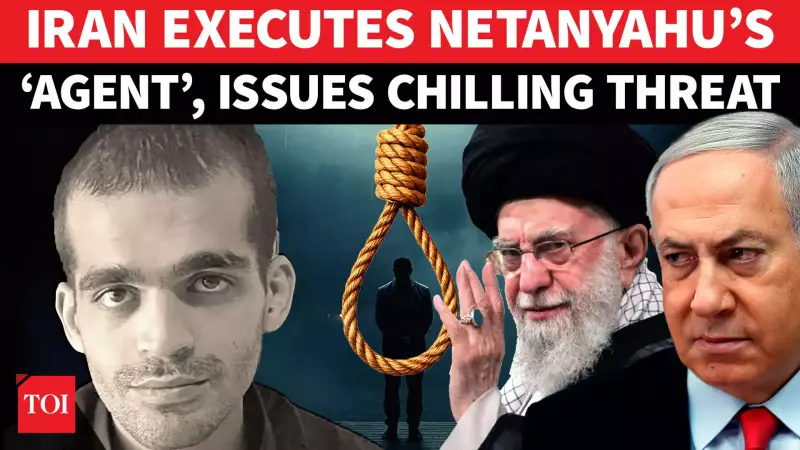
In a move that sends a stark message to its arch-foe, Iran has carried out the execution of a man convicted of working as an agent for Israel's intelligence agency, Mossad. The execution comes at a time of heightened military tensions and internal unrest within the Islamic Republic.
The Execution and the Charges
According to reports from Iranian state media, Ali Ardestani was executed after being found guilty of espionage. The authorities alleged that he was involved in passing sensitive and classified information to handlers working for Israel's Mossad. In return for his services, he was reportedly promised payments in cryptocurrency and opportunities for foreign travel. The execution was confirmed on January 7, 2026.
A Broader Crackdown on Espionage
This execution is not an isolated incident but part of a wider, aggressive campaign by Iranian security forces against alleged spies. The government has initiated a sweeping crackdown on espionage networks following a period of heightened tensions and recent military clashes with Israel. This action appears designed to demonstrate internal strength and send a chilling deterrent to both external enemies and potential informants within the country.

The timing is particularly significant as it coincides with massive protests reported in Tehran. By taking such a severe step, the regime likely aims to project an image of control and resolve in the face of both domestic dissent and international pressure.
Regional Repercussions and the Message to Israel
The execution of Ali Ardestani is a direct and provocative signal to Israel. It underscores the ongoing shadow war between the two nations, which spans cyber-attacks, assassinations, and espionage. By publicly announcing the execution, Iran is making it clear that it considers the threat of infiltration a top priority and will respond with the ultimate penalty.
This event is set against a complex geopolitical backdrop involving multiple international actors. The action risks further escalating an already volatile situation in the Middle East, where any miscalculation could lead to broader conflict. For the Iranian leadership, this serves a dual purpose: addressing a genuine security concern while also rallying nationalist sentiment against a common external enemy.
The execution of an alleged Mossad agent marks a serious escalation in Iran's internal security measures. It highlights the regime's focus on eliminating perceived threats from within, even as it contends with public protests. The world will be watching closely to see how Israel and other nations respond to this bold and chilling message from Tehran.






