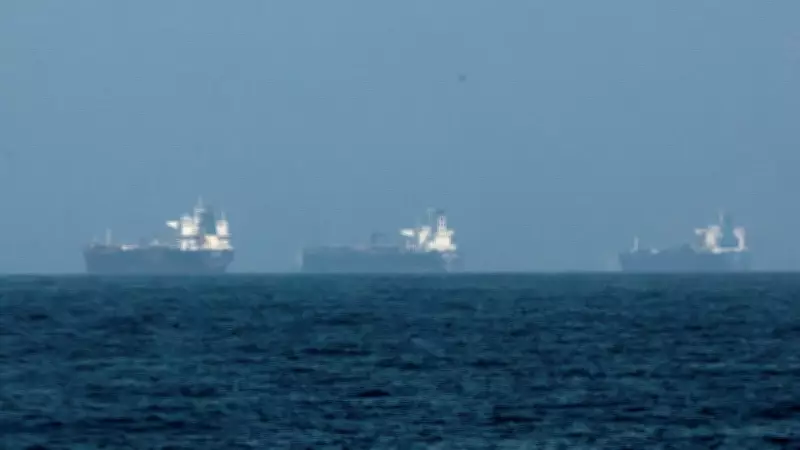
Iran's Revolutionary Guards Assert Control Over Strait of Hormuz in Wartime
In a significant declaration that underscores escalating regional tensions, Iran's Revolutionary Guards have stated that passage through the strategically vital Strait of Hormuz will be under the control of the Islamic Republic during times of war. This announcement, made on March 5, 2026, directly addresses the critical maritime chokepoint through which a substantial portion of the world's oil shipments flows.
Guards' Statement on Maritime Security
The Guards, a powerful military force in Iran, emphasized that in the event of conflict, they would oversee and regulate all maritime traffic through the strait. This position reinforces Iran's longstanding capability to influence global energy markets and regional security dynamics. The statement serves as a clear reminder of Iran's strategic leverage in the Persian Gulf, where the strait serves as a narrow passage connecting the Gulf of Oman to the Arabian Sea.
Implications for Global Trade and Energy
The Strait of Hormuz is one of the world's most crucial waterways, with approximately one-fifth of global oil consumption passing through it daily. Any disruption or control exerted by Iran during wartime could have profound implications for international trade, energy prices, and geopolitical stability. This declaration likely aims to deter potential adversaries by highlighting Iran's defensive posture and its readiness to secure its territorial waters under hostile conditions.

Regional and International Context
This announcement comes amid ongoing tensions in the Middle East, where Iran has frequently clashed with neighboring states and global powers over security issues. By asserting control over the strait in wartime scenarios, Iran positions itself as a key player in regional security affairs, capable of impacting not only local conflicts but also broader international relations. The statement may prompt responses from other nations reliant on the strait for oil exports, such as Saudi Arabia and the United Arab Emirates, as well as from global powers like the United States, which maintains a naval presence in the area.
Historical Precedents and Future Outlook
Iran has previously threatened to close the Strait of Hormuz during periods of heightened conflict, citing its right to defend national interests. This latest statement builds on that history, framing it within a formal wartime context. As geopolitical rivalries persist, such declarations could influence military strategies and diplomatic negotiations in the region, potentially leading to increased naval patrols or security agreements among affected countries.
In summary, the Revolutionary Guards' assertion of control over the Strait of Hormuz during war highlights the ongoing volatility in the Middle East and Iran's pivotal role in shaping maritime security. This development warrants close monitoring by international observers concerned with global energy supplies and regional peace.