

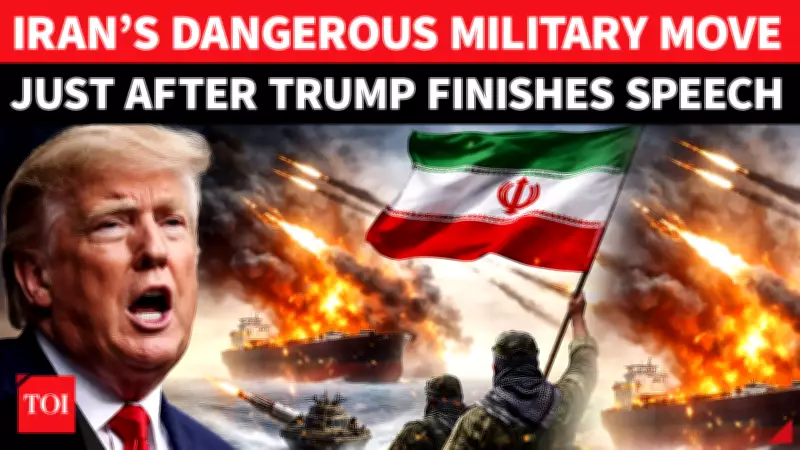
Iran Unleashes Missile Barrage on Israel During Trump's War Address
In a dramatic escalation of regional hostilities, Iran launched fresh waves of missile attacks against Israel on April 2, 2026. The strikes occurred precisely as former U.S. President Donald Trump was concluding a major war address, creating a tense geopolitical moment.
Israeli Air Defenses Activated Amid Multiple Strikes
The Israel Defense Forces (IDF) swiftly confirmed the attacks, reporting that their advanced air defense systems intercepted numerous incoming missiles. Impacts were registered in the metropolitan area of Tel Aviv, Israel's bustling economic and cultural hub. Military analysts are investigating the potential use of cluster munitions in the assault, which could indicate a more aggressive tactical approach by Iran.
This coordinated missile barrage represents one of the most significant direct attacks from Iran on Israeli soil in recent years, signaling a dangerous shift from proxy warfare to overt military confrontation.

Bahrain Issues Emergency Siren Warnings
Simultaneously, emergency sirens blared across Bahrain, urging civilians to immediately seek shelter. While the exact cause of Bahrain's alarm remains under official investigation, its timing alongside the Iranian strikes suggests a heightened state of alert across the Persian Gulf region. This development points to the rapidly spreading ripple effects of the Iran-Israel conflict, potentially drawing neighboring states into the crisis.
Trump's Address and Regional Fallout
Donald Trump's war address, which concluded moments before the missile attacks, focused on broader Middle Eastern security challenges. The juxtaposition of his speech with Iran's military action has intensified global scrutiny on U.S. foreign policy in the region. Diplomatic observers note that this incident could complicate international efforts to de-escalate tensions.
The immediate aftermath has seen a sharp spike in regional anxiety, with fears mounting that this exchange could trigger a wider regional war involving multiple state and non-state actors. Security forces across the Middle East are reportedly on high alert, monitoring for further provocations or retaliatory measures.
Analysis of Escalating Geopolitical Tensions
This event underscores several critical developments in Middle Eastern geopolitics:
- Direct Military Engagement: Iran's decision to launch missiles directly at Israel marks a departure from its previous reliance on proxy groups like Hezbollah or the Houthis.
- Multi-Front Alert Status: The sirens in Bahrain indicate that Gulf Cooperation Council (GCC) nations are preparing for potential spillover effects, possibly including maritime disruptions in strategic waterways.
- Timing and Symbolism: The attack coinciding with Trump's address may be interpreted as a deliberate message to both Israeli and American leadership about Iran's military capabilities and resolve.
As the situation develops, international bodies are calling for restraint, while defense analysts warn that the region stands at a precarious juncture. The coming hours and days will be crucial in determining whether this incident leads to further military escalation or becomes a catalyst for renewed diplomatic initiatives.






