

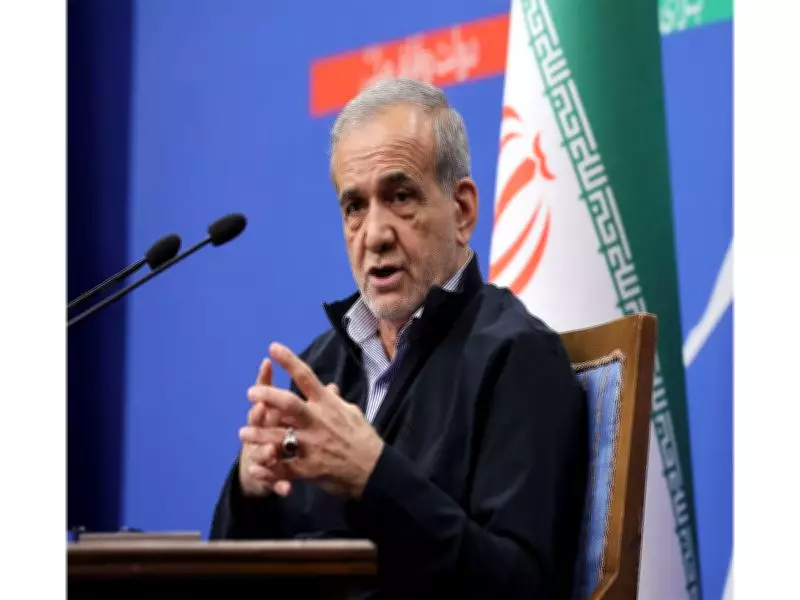
Iranian President Pezeshkian Slams US Over Hypocritical Stance Amid Ceasefire Extension
In a sharp rebuke, Iranian President Masoud Pezeshkian has publicly criticized the United States for what he describes as a hypocritical position regarding the ongoing conflict in Gaza. His remarks come as ceasefire extensions are being negotiated, highlighting deep-seated tensions in Middle Eastern diplomacy.
Pezeshkian's Condemnation of US Policies
President Pezeshkian accused the US of maintaining a contradictory stance by advocating for peace while simultaneously supporting actions that perpetuate violence in the region. He emphasized that such hypocrisy undermines efforts to achieve a lasting resolution to the Gaza crisis. "The United States cannot claim to seek peace while its policies fuel conflict," Pezeshkian stated, pointing to recent diplomatic maneuvers.
Context of Ceasefire Extensions
The criticism arises amid discussions to extend the temporary ceasefire in Gaza, a move aimed at alleviating humanitarian suffering. However, Pezeshkian argued that these short-term measures are insufficient without addressing the root causes of the conflict. He called for a comprehensive and permanent ceasefire that includes:

- An immediate halt to all military operations.
- Increased humanitarian aid access to affected populations.
- International mediation to foster long-term stability.
Iran has consistently positioned itself as a vocal critic of US foreign policy in the Middle East, and this latest statement reinforces its role in regional geopolitics. Pezeshkian's comments reflect Iran's broader strategy to challenge US influence and advocate for Palestinian rights.
Implications for US-Iran Relations
This public condemnation is likely to strain already tense relations between Iran and the United States. Analysts suggest that such rhetoric could hinder diplomatic efforts, including potential negotiations over nuclear agreements or regional security issues. The US has not yet issued an official response, but previous administrations have dismissed similar accusations as propaganda.
As ceasefire talks continue, the international community watches closely, with many hoping for a breakthrough that addresses both immediate humanitarian needs and underlying political grievances. Pezeshkian's stance underscores the complex interplay of power and principle in Middle Eastern conflicts.






