

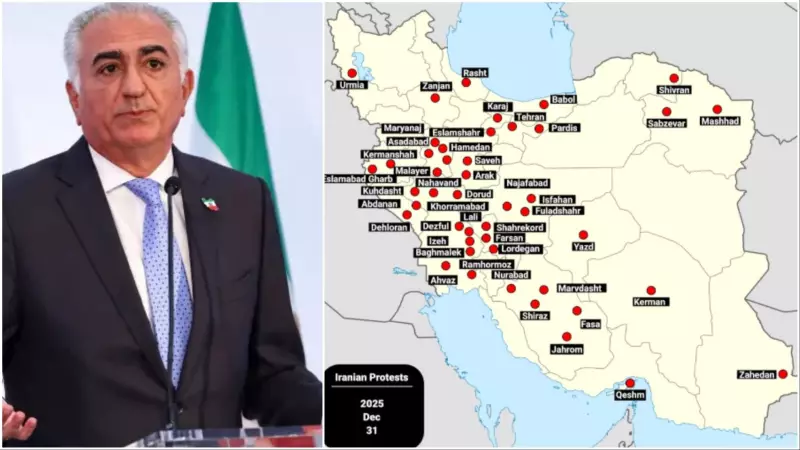
Iran is witnessing its most significant wave of public dissent in years, as massive crowds have flooded the streets of Tehran and other major cities for twelve consecutive days. The protests, ignited by deep-seated economic anger including a collapsing currency, have evolved into a direct political challenge to the country's clerical establishment.
Nationwide Unrest and Defiant Slogans
According to human rights groups, the unrest has now spread to more than 100 cities and towns across all 31 provinces of Iran. Videos verified by the BBC show thousands marching peacefully in the capital, Tehran, and the holy city of Mashhad. The chants heard from the crowds mark a stark escalation, directly targeting the foundations of the Islamic Republic.
Protesters have been heard shouting "Death to the dictator" and "Don't be afraid, we are all together." Some footage captures a powerful symbol of defiance: crowds dismantling government surveillance cameras. Notably, slogans have included calls for the overthrow of Supreme Leader Ayatollah Ali Khamenei and even the return of a monarchy under exiled opposition figure Reza Pahlavi.

State Response: Internet Blackout and Crackdown
As the demonstrations intensified, monitors reported a near-total nationwide internet blackout, severely cutting off communication for Iranians and obscuring the full scale of events from the outside world. While many protests remained peaceful, videos from western Iran suggest the use of live fire by authorities in at least one city.
Human rights organisations have documented dozens of deaths, including children, and thousands of arrests. In contrast, Iranian state media has consistently sought to downplay or outright deny the magnitude of the protests. The digital censorship has tightened further, with calls for fresh demonstrations continuing to circulate despite the restrictions.
International Reactions and Internal Power Dynamics
The situation has drawn sharp international attention. Former US President Donald Trump issued a warning, stating there would be consequences if the killings of protesters continued. Within Iran, the exiled Reza Pahlavi urged his supporters to keep demonstrating, alleging that the internet shutdown was a deliberate attempt to disrupt the protests.
Internally, newly elected President Masoud Pezeshkian called for restraint. However, ultimate power in Iran rests not with the presidency but with the office of the Supreme Leader, Ayatollah Ali Khamenei. The nation appears to be entering a highly volatile phase where economic despair, open political dissent, and state repression are colliding head-on, setting the stage for a critical period ahead.






