

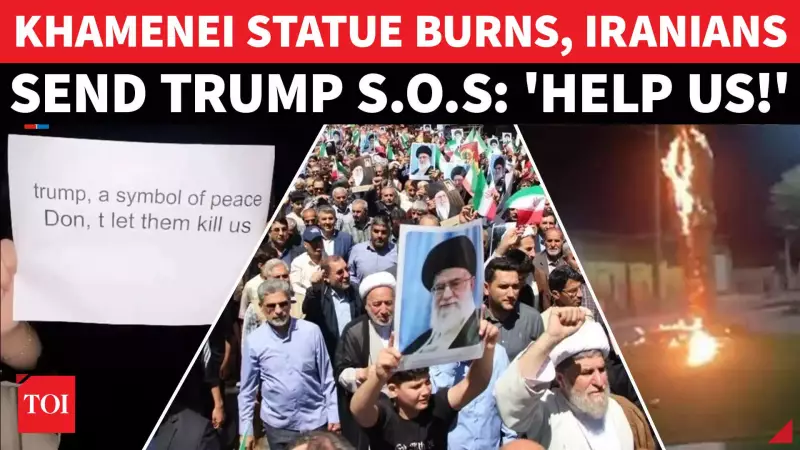
Iran is currently engulfed in one of its most turbulent and widespread periods of civil unrest in recent memory. The protests, which have now entered their eleventh consecutive day, have escalated dramatically, spreading from initial street demonstrations to hospitals, markets, and cities across the nation.
Open Defiance and Direct Appeals to Washington
In a striking display of dissent, demonstrators are openly challenging the authority of state security forces. Videos and reports emerging from Tehran and other cities show protesters taking the symbolic step of renaming streets after former U.S. President Donald Trump. This act is coupled with direct appeals from the crowds to Washington for assistance, marking a significant shift in the dynamics of the uprising as clashes with government forces intensify.
According to human rights groups monitoring the situation, the crackdown has turned deadly. At least 36 people have been killed, with reports confirming that minors are among the casualties. The scale of arrests is massive, with thousands detained as the protests have expanded to engulf more than ninety cities across Iran.

Economic Resistance and a Regime in Crisis
The political revolt is now converging with serious economic resistance, signalling a deepening crisis for the establishment. Critical bazaar strikes in Tehran and Mashhad have brought commercial activity to a standstill, disrupting daily life and applying economic pressure from within. This combination poses a formidable challenge to the Iranian regime's grip on power.
Graphic footage circulating online depicts security forces employing harsh tactics, including firing tear gas into crowds, raiding hospitals to detain the injured, and confronting mourners at funerals. These funerals for those killed in the protests have themselves transformed into sites of mass rallies and further anti-government chanting.
A Historic Crossroads and a Claimant to Leadership
As the government attempts to tighten its control, a potential alternative has emerged from exile. Prince Reza Pahlavi, the son of Iran's last Shah, has publicly stated that he is prepared to lead a transitional government. His stated goal is to steer the country toward a secular democracy through a national referendum, should the current regime fall.
With chants against the leadership echoing from province to province and global scrutiny intensifying by the hour, Iran finds itself at a pivotal historical juncture. The outcome of this widespread uprising, which merges political anger with economic grievance, remains uncertain, but its progression is being watched closely by the international community.






