

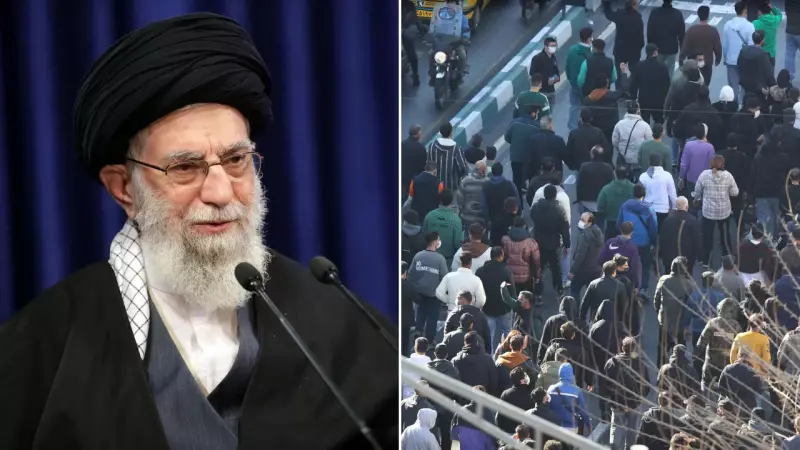
Iran is gripped by a fresh wave of nationwide protests, marking a significant escalation in public dissent against the country's clerical leadership. What began as demonstrations over a severe economic downturn has rapidly transformed into a politically charged movement openly challenging the foundations of the Islamic Republic.
From Economic Despair to Political Revolt
The immediate trigger for the current unrest, now in its sixth consecutive day, was a dramatic collapse in the value of Iran's currency. The rial plummeted to a historic low, briefly trading at around 1.4 million to the US dollar. This currency shock, combined with an official year-on-year inflation rate exceeding 50 percent and even sharper rises in food prices, sparked immediate action.
Merchants in Tehran's Grand Bazaar shuttered their shops in protest, a powerful traditional signal of discontent. The movement quickly spread beyond the bazaars. Students occupied university campuses, and demonstrators took to the streets in cities including Tehran, Isfahan, and Lorestan, blocking roads and clashing with security forces.

The response from authorities has been harsh. State-linked media and human rights groups report that at least several protesters have been killed in cities like Lorestan, Lordegan, and Kouhdasht. Dozens of police and Basij militia members were injured, while hundreds of demonstrators have been detained. Security forces have used tear gas, made mass arrests, and, in some instances, live ammunition to disperse crowds.
Slogans Target the Heart of the Regime
A critical shift distinguishes these protests from previous waves of economic discontent. While initially focused on financial hardship, the chants have evolved to directly target the country's supreme leadership. Videos circulating online show crowds boldly chanting "Mullahs must leave Iran" and "Death to the dictatorship."
Protesters are no longer limiting their anger to the government of President Masoud Pezeshkian but are pointing squarely at Supreme Leader Ayatollah Ali Khamenei and the unelected institutions that hold ultimate power. Calls for regime change, free elections, and even the return of exiled crown prince Reza Pahlavi have been heard, reflecting a level of defiance rarely expressed publicly in recent years.
Analysts suggest this boldness stems from a deep-seated belief that the system is incapable of meaningful reform, a sentiment hardened by past protest cycles like the "Women, Life, Freedom" movement following the death of Mahsa Amini in 2022.
Leadership Crisis and a Faltering Response
The unrest places immense pressure on the 85-year-old Supreme Leader at a time of significant internal and external challenges. Khamenei has not made a public appearance to address the crisis, fueling speculation about his health and control. Behind the scenes, succession planning is reportedly underway, with rival factions and the powerful Islamic Revolutionary Guard Corps maneuvering for influence.
In response, President Pezeshkian has announced economic measures, including a reshuffle of senior officials and the reappointment of Abdolnaser Hemmati to lead the Central Bank. The government plans to dismantle Iran's complex multi-rate currency system, often blamed for corruption, and has scrapped a subsidized exchange rate for essential imports.
Pezeshkian has struck a conciliatory tone, acknowledging public anger is directed at the state and stating there is "no need to blame America." However, many Iranians view these steps as insufficient, failing to address decades of economic mismanagement, international sanctions, and entrenched power structures beyond the president's reach. Hemmati's reappointment has also angered hardline lawmakers, deepening elite divisions.

The protests unfold amid severe environmental stress, chronic water shortages, and external threats. Earlier in July 2025, Khamenei was reported to have identified three senior clerics as potential successors, notably excluding his son, Mojtaba. The death of former hardline president Ebrahim Raisi in a 2024 helicopter crash had already complicated the succession landscape.
While Iran's security apparatus remains formidable, the message from the streets is clear: public fear has diminished, patience has expired, and the legitimacy of the clerical establishment is being challenged more directly than it has been in years.





