

Iran is witnessing a significant wave of anti-government demonstrations that have now stretched into their second consecutive week. The unrest, which initially erupted over severe economic hardships, has rapidly transformed into a broader movement demanding fundamental political change and an end to the nation's theocratic rule.
Widespread Unrest and Security Crackdown
Despite facing a heavy-handed security response, widespread internet blackouts, and reports of mass arrests, the protests have continued to spread across multiple Iranian cities. The demonstrations signal a deep-seated public frustration that has intensified over time, challenging the authorities' grip on power.
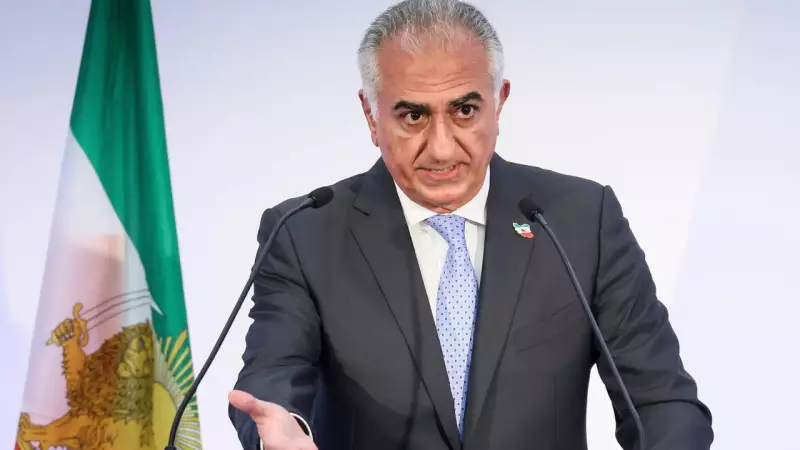
In this volatile climate, a prominent figure from Iran's past has re-emerged to voice support for the protesters: Reza Pahlavi, the exiled crown prince and son of Iran's last Shah. Through video messages circulated on social media, Pahlavi has actively encouraged Iranians to maintain their presence on the streets.

Reza Pahlavi's Call to Action
Pahlavi claims that the sustained public pressure has "severely weakened Khamenei’s repressive apparatus" and that the regime is grappling with a shortage of loyal security personnel. He has made direct appeals to members of the Iranian military, police, and state institutions, urging them to defect and not stand "against the Iranian people for the sake of a regime whose fall has begun and is inevitable."
Asserting that opposition forces are ready for a transition, Pahlavi revealed the existence of a "100-day plan" aimed at establishing a democratic government and preventing chaos post-regime. His message to the protesters is clear and persistent: "Do not abandon the streets. My heart is with you… We will take back Iran."
Who is the Exiled Crown Prince?
Reza Pahlavi, born in Tehran in 1960, is the eldest son of Mohammad Reza Pahlavi, the last Shah of Iran who was overthrown in the 1979 Islamic Revolution. He was formally named crown prince in 1967. At age 17, he left Iran in 1978 for military training in the United States, just months before the revolution forced the royal family into permanent exile.
After his father's death in 1980, Pahlavi declared himself Shah in exile. However, after living in the United States for over five decades, primarily in the Washington, D.C. area, he has publicly stated that he does not seek a restoration of the monarchy. Instead, he positions himself as an advocate for a secular, democratic Iran to be achieved through non-violent civil disobedience and a national referendum.
As protests rage, Pahlavi announced his preparations to return to Iran, stating in a recent post, "I believe that day is very near." His influence, however, remains a topic of debate among analysts. While some point to a growing nostalgia for the pre-revolution era, others question the depth of his support within Iran after such a long absence.
The ongoing protests represent one of the most sustained challenges to Iran's clerical leadership in recent years, merging economic despair with explicit calls for systemic political overhaul.






