

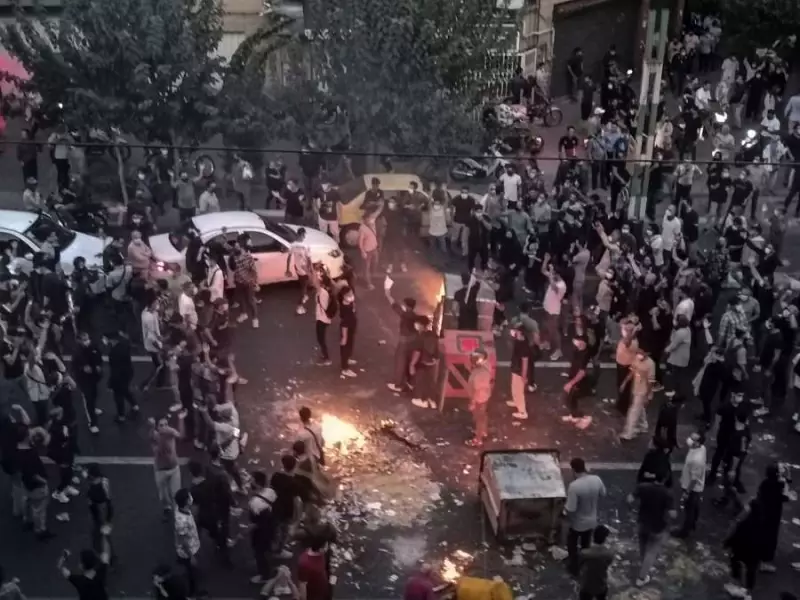
Iran is witnessing a significant wave of public demonstrations, with protests erupting in the capital Tehran and several other cities. The unrest, driven by a deepening economic crisis and political dissent, has prompted authorities to impose severe measures, including widespread internet disruptions. The situation remains fluid, drawing reactions from former leaders and international observers.
Roots of the Discontent: Economic Hardship and Political Dissent
The protests are not an isolated incident but stem from long-simmering public frustration. A severe economic crisis, marked by soaring inflation, unemployment, and a collapsing national currency, has pushed many Iranians to the brink. The government's handling of the economy, coupled with ongoing political repression, has created a volatile mix. Citizens are taking to the streets to voice their anger not just over financial hardship but also against the ruling establishment, with some chants directly challenging Supreme Leader Ayatollah Ali Khamenei.
Adding a symbolic dimension to the protests is the involvement of Reza Pahlavi, the exiled son of the last Shah of Iran. Pahlavi, who lives outside the country, has been an active voice for regime change and has expressed support for the protesters. His statements have galvanized a section of the opposition, though the protests themselves appear to be a broad-based expression of popular anger rather than a movement led by any single figure.

Government Crackdown and Communication Blackout
In response to the escalating protests, Iranian authorities have moved swiftly to control the narrative and suppress organizing efforts. A major tactic has been the restriction and, in many areas, complete shutdown of internet services. This move is a familiar one, used in past periods of unrest to prevent the flow of information, stop the sharing of images and videos from the ground, and hinder coordination among protesters. Mobile networks and social media platforms have been heavily disrupted or rendered inaccessible.
Security forces have been deployed in strength in key protest locations, particularly in Tehran. Reports from within the country, though difficult to verify due to the communication blackout, suggest clashes between demonstrators and police. The government has officially acknowledged the protests but has blamed "foreign enemies" and "counter-revolutionaries" for instigating the unrest, a common refrain used to delegitimize domestic opposition.
International Reactions and the Road Ahead
The events in Iran have not gone unnoticed on the global stage. Former US President Donald Trump, a longtime critic of the Iranian government, commented on the situation, reiterating his hardline stance against the regime. Other Western nations are monitoring the developments closely, though a unified international response has yet to materialize.
The critical question now is the trajectory of this protest wave. The combination of severe economic pain and a youthful population seeking greater freedoms presents a persistent challenge to the authorities. While the state has significant tools of repression at its disposal, including the Revolutionary Guards, the underlying grievances that fuel the protests remain unaddressed. The internet shutdown may create an information vacuum in the short term, but it is unlikely to extinguish the deep-seated public anger. The coming days will be crucial in determining whether the government can reassert control or if the protests will evolve into a more sustained challenge.
For the people of Iran, the struggle is twofold: confronting immediate economic hardship and daring to imagine a different political future. The streets of Tehran and other cities have once again become the arena for this high-stakes confrontation.






