

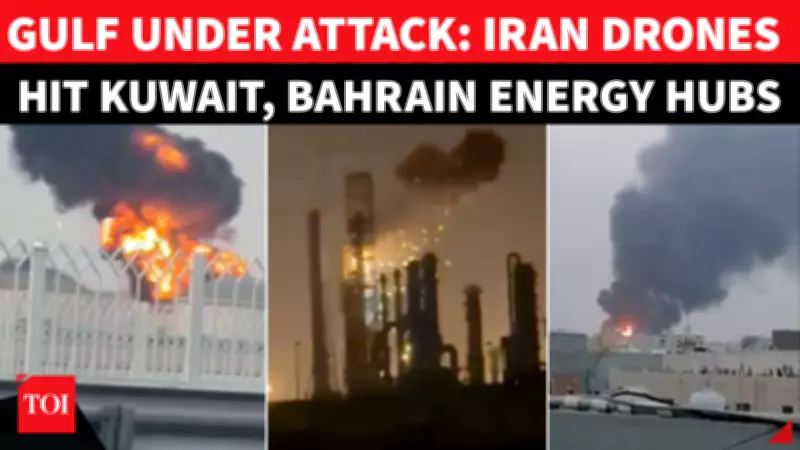
Iran Escalates Regional Conflict with Drone Attacks on Gulf Energy Infrastructure
In a significant escalation of hostilities in the Middle East, Iran has conducted coordinated drone strikes targeting critical oil refineries and energy facilities in Kuwait and Bahrain. These attacks are widely viewed as retaliatory measures for recent U.S. and Israeli military actions against Iranian civilian infrastructure. The strikes have ignited fears of a broader regional conflict that could destabilize the entire Gulf region.
Kuwaiti Energy and Military Facilities Targeted in Precision Strikes
In Kuwait, Iranian drones struck multiple high-value targets, including the strategically important Shuwaikh oil complex, which serves as a vital hub for the country's petroleum industry. Satellite imagery has confirmed the presence of significant fires at these locations, indicating successful hits. Additionally, power plants and other energy-related installations were damaged in the assault.
There are unconfirmed reports suggesting that U.S. Camp Buehring, a military base located in northern Kuwait, may have also been targeted during the attack. The potential involvement of American facilities adds a dangerous international dimension to the conflict, raising concerns about direct U.S.-Iran confrontation.

Bahrain's BAPCO Refinery Engulfed in Massive Blaze
Simultaneously, in Bahrain, Iranian drones struck the Bahrain Petroleum Company (BAPCO) refinery, one of the country's most important energy assets. The attack triggered enormous fires that spread through oil storage sections of the facility, creating a dramatic scene of destruction visible from considerable distances.
Bahraini officials have reported that emergency response teams have managed to contain the blaze, preventing it from spreading to adjacent facilities. However, the extent of damage to the refinery's operational capacity remains unclear, with potential implications for regional energy supplies.
No Casualties Reported Amid Growing Regional Tensions
Remarkably, authorities in both Kuwait and Bahrain have confirmed that no casualties have been reported from the drone strikes so far. This suggests the attacks were precision-targeted at infrastructure rather than population centers, though the economic and strategic impact is substantial.
The widening scope of these attacks represents a dangerous escalation in regional tensions. Iran has yet to issue an official statement claiming responsibility for the strikes, maintaining a veil of ambiguity around its direct involvement despite overwhelming evidence pointing to Iranian-origin drones.
Broader Implications for Gulf Security and Global Energy Markets
These coordinated attacks on two separate Gulf nations mark a significant expansion of Iran's military reach and willingness to target neighboring countries' critical infrastructure. The strikes have raised serious concerns about:
- The potential for a broader Gulf conflict involving multiple nations
- Disruptions to global energy supplies from the strategically vital region
- Increased volatility in international oil markets
- The security of U.S. military assets throughout the Middle East
- The possibility of further retaliatory strikes creating an escalating cycle of violence
The situation remains fluid and highly volatile, with regional powers and international observers closely monitoring developments. The attacks on Kuwait and Bahrain represent one of the most direct confrontations between Iran and Gulf Arab states in recent years, potentially reshaping the security landscape of the entire Middle East region.






