

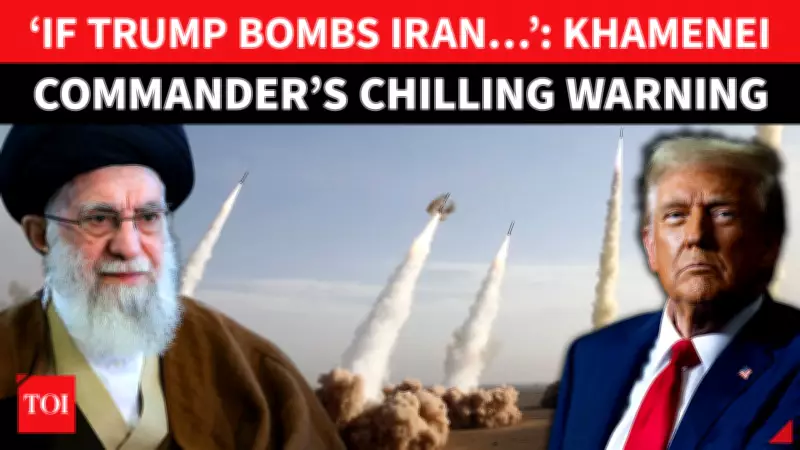
A senior Iranian military commander has delivered a sharp and unequivocal warning to the United States, asserting that the security of the entire Middle East region would be jeopardized if Iran faces any threats. The statement comes amid heightened geopolitical tensions and underscores Tehran's firm stance on regional security dynamics.
Iran's Stark Warning to Washington
Kioumars Heidari, the deputy commander of Iran's central Khatam al-Anbiya headquarters, emphasized that Tehran will never accept a scenario where Iran is placed in danger while other nations in the region remain secure. This declaration represents a clear and direct message to Washington, highlighting Iran's commitment to ensuring its own safety as a fundamental prerequisite for regional stability.
Regional Security Implications
The warning carries significant implications for the broader Middle East, suggesting that any conflict involving Iran and the United States would have far-reaching consequences. Heidari's statement explicitly links Iran's security to the overall safety of the region, indicating that Tehran views potential threats as destabilizing factors that could affect neighboring countries.

This position reflects Iran's long-standing foreign policy approach, which emphasizes deterrence and regional influence. The military commander's words serve as a reminder of the complex security architecture in the Middle East, where bilateral tensions can quickly escalate into broader regional crises.
Geopolitical Context and Timing
The warning emerges against a backdrop of ongoing diplomatic challenges and strategic maneuvering in the Middle East. Iran's statement appears designed to reinforce its red lines while communicating its readiness to respond to perceived threats. The timing of this message suggests Tehran is actively shaping the narrative around regional security as part of its broader strategic calculations.
Observers note that such warnings from Iranian military officials are not uncommon during periods of heightened tension, serving both as diplomatic signaling and domestic messaging. However, the explicit connection between Iran's safety and regional security adds a new dimension to the ongoing discourse about conflict prevention and stability in the Middle East.
As the situation continues to evolve, the international community will be closely monitoring developments, recognizing that statements from senior military commanders can influence diplomatic channels and strategic planning. The warning underscores the delicate balance of power in the region and the potential for rapid escalation when core security interests are perceived to be at stake.






