

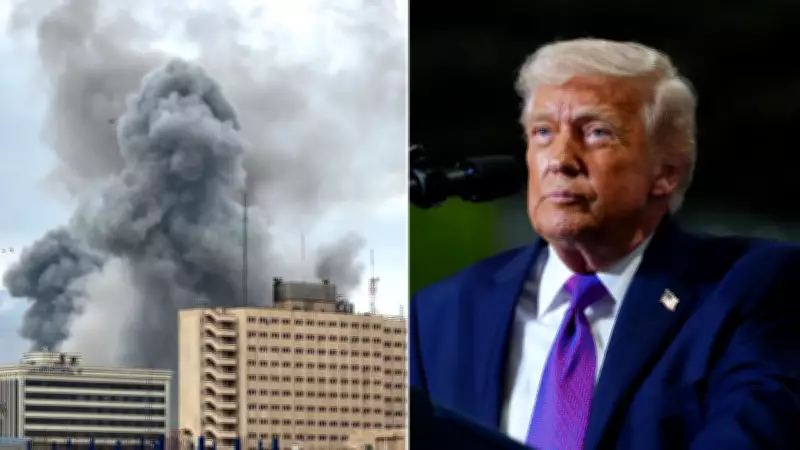
Iran's Stringent Ceasefire Conditions Clash with US Diplomatic Proposal
The ongoing military conflict in the Middle East, which began on February 28, shows no immediate signs of resolution as Iran has laid out a series of high-stakes demands for a potential ceasefire with the United States. According to a report from the Wall Street Journal, the Tehran regime, now under Supreme Leader Mojtaba Khamenei following the death of Ayatollah Ali Khamenei, has consolidated power within the Iranian government and the Islamic Revolutionary Guard Corps (IRGC). This consolidation comes amid daily, large-scale bombings across the region, including cities like Dubai and Abu Dhabi, escalating from initial targeted missions.
Tehran's Demands: A Tough Bargaining Position
Iran's demands, as detailed in the report, include the closure of all American military bases in the Gulf region and reparations for attacks on Iranian territory. Additionally, Tehran seeks to impose fees for ships transiting the Strait of Hormuz, mirroring Egypt's charges for Suez Canal passage. The regime also insists on the lifting of all US-imposed sanctions, guarantees against the resumption of war, and an end to Israeli strikes on Iran-aligned militias such as Hezbollah in Lebanon. A major sticking point is Iran's desire to maintain its missile program without negotiations to limit it.
However, the Trump administration has dismissed these demands as "ridiculous and unrealistic," according to a US official. Arab and US officials warn that such posturing could complicate diplomatic efforts, making a deal with Tehran more challenging than before the conflict erupted.

US Counterproposal: A 15-Point Plan for Peace
In response, US President Donald Trump has shared a 15-point proposal with Iran, aimed at ending the conflict. As reported by the New York Times, the plan emphasizes that "they cannot have a nuclear weapon" and addresses key issues including Iran's ballistic missile and nuclear programs. Pakistan facilitated the conveyance of this proposal, which seeks an "offramp" from the war now in its fourth week, involving multiple countries.
Israel's Channel 12 reported that Trump is proposing a one-month ceasefire, during which discussions would cover the handover of Iran's enriched uranium and a ban on further enrichment. The proposal also tackles maritime security concerns, as Iran has restricted Western shipping through the Strait of Hormuz since February 28, disrupting global oil and gas supplies and driving up prices. Upon compliance, Iran would see an end to all sanctions and receive assistance in developing civil nuclear energy at Bushehr.
Diplomatic Efforts Amid Ongoing Hostilities
Despite these diplomatic initiatives, there has been no direct contact between the US and Iran, with signals coming through Middle Eastern intermediaries. White House press secretary Karoline Leavitt acknowledged parallel efforts, stating, "As President Trump and his negotiators explore this newfound possibility of diplomacy, Operation Epic Fury continues unabated to achieve the military objectives laid out by the commander in chief and the Pentagon." Israeli officials have indicated that military operations could persist for weeks, with no clarity on whether Israel supports the US proposal.
Pakistan has positioned itself as a key intermediary, with de facto head and army chief Asim Munir leveraging ties with Iran's IRGC to facilitate communication. Munir reached out to Iranian parliament speaker Mohammad Bagher Ghalibaf, proposing Pakistan as a host for talks. Prime Minister Shehbaz Sharif expressed full support for dialogue, stating, "Subject to concurrence by the US and Iran, Pakistan stands ready and honoured to be the host to facilitate meaningful and conclusive talks for a comprehensive settlement of the ongoing conflict." Egypt and Turkey are also encouraging Tehran to engage constructively.
The situation remains fluid, with Iran's ability to respond quickly uncertain and the wider implications for regional stability hanging in the balance.






