

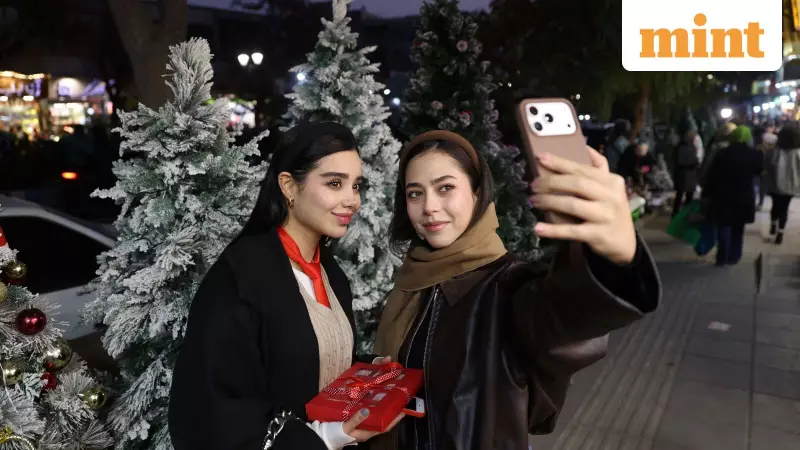
In a striking shift, the streets of Tehran are witnessing a level of social freedom unseen since the 1979 Islamic Revolution. Live music fills the air, young people dance in cafes, and women increasingly appear in public without the mandatory hijab. However, this apparent relaxation masks a harsh parallel reality: a severe and widespread crackdown on political dissent, with executions reaching a nearly four-decade high.
A Calculated Concession to Preserve Power
Analysts and activists describe this dual approach as a calculated survival strategy by a regime under immense pressure. Facing the aftermath of a devastating 12-day war with Israel in June and crippling international sanctions that have sent the economy into a tailspin, Iran's clerical rulers are making tactical concessions. They are tolerating social freedoms that do not directly threaten the system's core, while ruthlessly suppressing any form of political mobilization that could.
"The regime has one goal, and that is to make sure there is no collective action, no uprising," said Fatemeh Haghighatjoo, a former Iranian parliament member now in exile in the U.S. She explained that authorities fear another mass protest like the 2022 uprising triggered by Mahsa Amini's death. "They decided they can't fight people on every corner."

The June war exposed critical vulnerabilities, including Iran's inability to defend its population and failures in its intelligence services. This revelation amplified existing public discontent over a failing economy and deeply unpopular social restrictions.
Record Executions and Arrests Amid Social Thaw
Even as social codes are flouted, the state's machinery for punishing dissent operates at full force. According to data from the Washington-based Abdorrahman Boroumand Center, Iran has executed over 1,870 people so far in 2025, nearly double the figure from last year. A shocking surge has occurred since November alone, with more than 490 executions, surpassing the total for all of 2021.
High-profile arrests continue. Nobel Peace laureate and human rights campaigner Narges Mohammadi was arrested earlier this month along with around 40 activists during a memorial in Mashhad. Mohammadi, who was temporarily released from prison on medical grounds, is reported by her family to have been severely beaten during detention, requiring emergency medical care. She remains in custody.
President Masoud Pezeshkian has advocated for a softer approach on social violations for now, stating, "We shouldn't impose unnecessary restrictions or put pressure on people. Anything that fuels public discontent is effectively helping the Zionist regime." However, he affirmed opposition to "social irregularities," leaving the method of address ambiguous.
The Limits of Tolerance and Looming Crises
The relaxation has clear limits. While the morality police and their distinctive vans have largely vanished from Tehran's streets, the state intervenes when it perceives a gathering as too symbolic or challenging. Authorities shut down a Tehran Design Week event at Tehran University days early after it was hailed online as a symbol of liberation. A five-day jazz festival had its final two days canceled. Following a marathon on Kish Island in early December where many women ran without headscarves, two organizers were detained.
An Iranian artist in his 30s noted that people understand the loosening is a government strategy to "cool the temperature." Keivan Hosseini, an electronic musician who performed his first public gig last year, described the open atmosphere but stressed that "morsels of social freedom do nothing to change a worsening economic situation," which remains the population's primary concern.
Iran faces a confluence of domestic crises: severe water shortages, widespread power cuts, and an economic disaster driven by hyperinflation, sanctions, and a collapsing currency. Aniseh Bassiri Tabrizi, an Iran expert at Chatham House, notes the regime prioritizes external and internal security threats, especially from Israel, over social taboos. "When it comes to those threats, the regime is choosing to deal with them with a very firm hand," she said.

She emphasized that the new social freedoms are not a voluntary, top-down concession by the regime. The critical, unresolved question for Iran's future is: How irreversible will this change be?





