

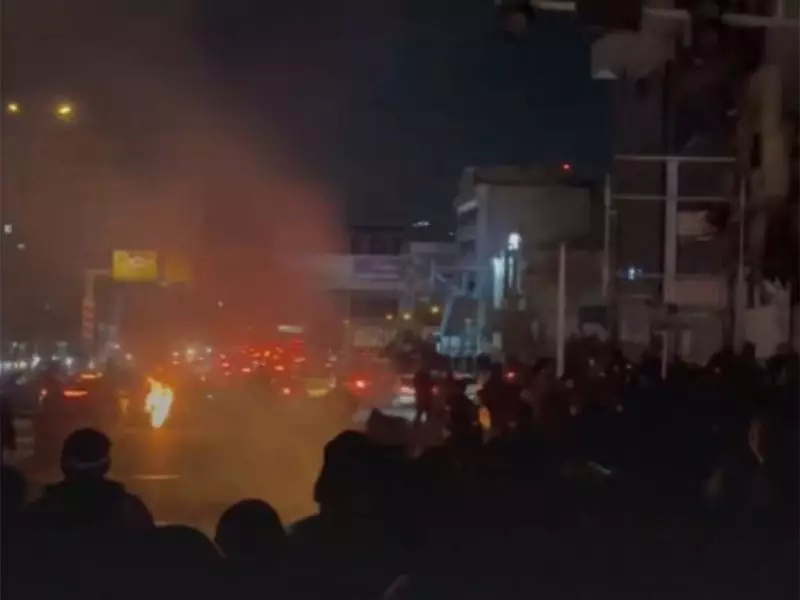
Iran has plunged into a state of severe digital isolation as a government-imposed internet shutdown entered its 84th consecutive hour. This drastic measure is a direct response to widespread protests that have erupted across the nation following the tragic death of Mahsa Amini. The regime, led by Supreme Leader Ayatollah Ali Khamenei, is attempting to stifle dissent and control the narrative by severing citizens' primary means of communication and information sharing.
Unprecedented Digital Crackdown on Dissent
The current blackout, which began on Friday, August 23, 2024, represents one of the most severe and prolonged internet disruptions in Iran's recent history. According to the digital rights monitoring group NetBlocks, the disruption has caused a near-total collapse of connectivity, affecting mobile data networks and significantly throttling fixed-line internet services. This has left millions of Iranians in a virtual information black hole, unable to communicate with loved ones, access news, or share videos and images of the ongoing crackdown with the outside world.
The trigger for the latest wave of unrest is the death of Mahsa Amini, a 22-year-old woman who died in September 2022 after being detained by the country's morality police for allegedly violating Iran's strict hijab laws. Her death ignited a historic protest movement under the slogan "Woman, Life, Freedom." While the initial uprising was brutally suppressed, public anger remains palpable, flaring up again around key anniversaries and following new incidents of enforcement.

Regime's Strategy of Silencing and Control
The Iranian government has a well-documented history of using internet shutdowns as a tool of suppression. During the peak of the 2022 protests, authorities enforced a similar digital blockade. The current 84-hour shutdown follows this familiar pattern, aiming to prevent protesters from organizing and to stop the flow of visual evidence of state violence from reaching international audiences. By controlling the digital sphere, the regime hopes to quell demonstrations without the world watching.
However, this strategy comes at a tremendous cost. Beyond silencing dissent, the blackout cripples daily life. It disrupts businesses, online banking, telemedicine, and access to essential services. Students are cut off from online learning platforms, and families are separated from communication channels. The economic impact is also severe, with losses mounting for every hour the country remains offline.
Global Condemnation and the Call for Action
The international community and digital rights advocates have strongly condemned the Iranian government's actions. Organizations like NetBlocks and Access Now have highlighted how such shutdowns violate fundamental human rights, including the rights to freedom of expression, access to information, and peaceful assembly. They argue that cutting off the internet is a disproportionate and collective punishment that harms an entire population.
There are growing calls for global tech companies and foreign governments to take stronger stances. Advocates urge for the deployment of counter-censorship tools and for maintaining pressure on the Iranian regime to restore connectivity. The situation underscores a broader global challenge: the weaponization of internet access by authoritarian states against their own people.
As the 84-hour mark passes, the standoff continues. The Iranian people's struggle for basic freedoms persists in the face of intense repression, while the Khamenei regime demonstrates its willingness to isolate the nation to maintain its grip on power. The world watches, as the digital blackout in Iran becomes a stark symbol of the battle for control in the 21st century.






