

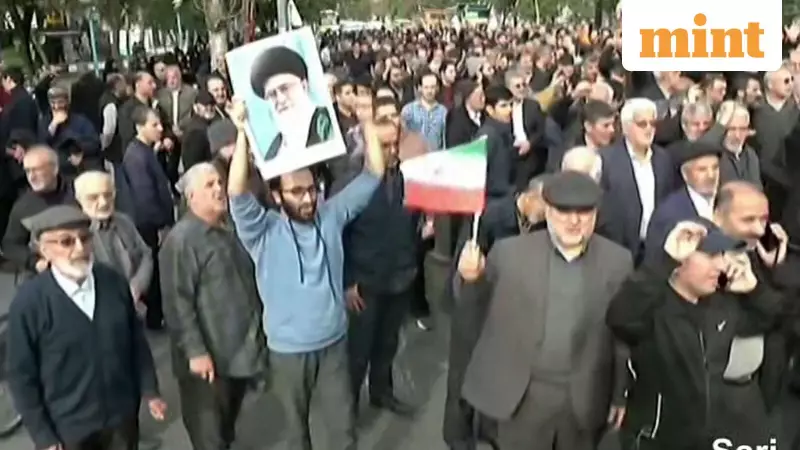
Iran is witnessing a significant wave of internal unrest, with its Supreme Leader directly linking the demonstrations to the United States and warning of severe consequences for participants. Ayatollah Ali Khamenei has accused protesters of acting to "please" US President Donald Trump, while American leadership has pledged a forceful, though non-ground troop, response if the Iranian regime violently cracks down on its citizens.
Supreme Leader's Fiery Accusations and Warnings
In a public address aired on state television, the 86-year-old Supreme Leader launched a scathing attack on both the domestic protesters and the US President. Khamenei dismissed the demonstrators as individuals who are "ruining their own streets ... in order to please the president of the United States." He further taunted Trump, suggesting he focus on America's own problems, stating, "If he knew how to run a country, he would run his own."
Khamenei also issued a stark historical warning to Trump, comparing him to ancient tyrants. "Trump should know that world tyrants such as Pharaoh, Nimrod, Reza Shah and Mohammad Reza were brought down at the peak of their arrogance. He too will be brought down," the Supreme Leader declared. He revisited the June attacks, claiming over a thousand Iranians were martyred and that Trump's admission of ordering the attack proved his hands were "stained with the blood of Iranians."

Severe Legal Crackdown and US Counter-Threat
The Iranian establishment is preparing a harsh legal response. Tehran's prosecutor, Ali Salehi, stated that acts of vandalism during protests could be deemed "moharebeh" or "waging war against God," a charge punishable by execution. "We will not show leniency toward armed terrorists. Their sentence is moharebeh," Salehi was quoted by the Tasnim news agency. State media has consistently referred to the protesters as "terrorists," setting a grim precedent for the state's response.
Judiciary chief Gholamhossein Mohseni-Ejei separately vowed that punishment would be "decisive, maximum and without any legal leniency." This comes as the Institute for the Study of War reported a massive surge in demonstrations, recording 116 protests across 22 provinces in a single day starting January 8, with 20 of those involving over 1,000 participants.
International Reactions and Escalating Tensions
On the international front, the rhetoric is equally heated. US President Donald Trump stated clearly on Friday that "Iran's in big trouble" and that America is watching carefully. He reiterated his threat of intervention, clarifying, "It doesn't mean boots on the ground, but it means hitting them very, very hard where it hurts" if Iran starts killing protesters.
Iranian Nobel Peace Prize laureate Shirin Ebadi called for stronger Western condemnation of the regime. In a powerful statement, she said Iran's theocracy "has made cruelty a governing method" and argued that a government shooting peaceful protesters at home cannot claim moral authority abroad. The protests, which began in late December over economic grievances, have reportedly led to at least 65 deaths and represent the most serious challenge to the Iranian government in years.






