

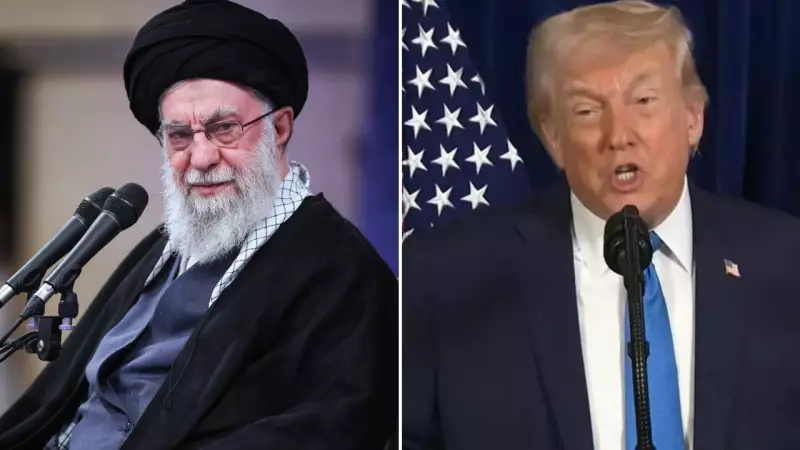
An exclusive intelligence assessment has revealed that Iran's Supreme Leader, Ayatollah Ali Khamenei, has prepared a detailed contingency plan to flee the country. This drastic measure is reportedly in place should the ongoing nationwide protests overwhelm the regime's security apparatus.
Details of the Secret Escape Blueprint
According to the report shared with The Times, the 86-year-old leader would depart from Tehran with a highly controlled group of fewer than 20 individuals. This inner circle is said to include his closest aides and immediate family members. Notably, the group would feature his son, Mojtaba Khamenei, who is widely considered to be his father's preferred successor to the leadership.
Intelligence sources indicate that preparations for this potential exit are already advanced. They involve securing overseas assets, properties, and substantial liquid cash to facilitate a rapid departure if the regime loses control. Khamenei controls a massive financial empire through opaque charitable foundations, most notably Setad, which has been estimated in the past to be worth tens of billions of dollars.

Many senior figures within the Iranian leadership already have relatives living abroad, including in the United States, Canada, and Gulf nations, a factor that complicates the regime's stance.
Nationwide Unrest Reaches Critical Mass
Meanwhile, anti-government protests have intensified, continuing for an eighth consecutive day. Data from the Human Rights Activists News Agency shows the demonstrations have spread to at least 222 locations across 78 cities in 26 provinces. The toll is severe, with at least 20 people killed, including one member of the security forces, and dozens more injured.
What began as labour strikes driven by deep economic grievances has rapidly evolved into open calls for regime change. Circulating online videos depict a bold defiance, showing protesters burning images of both the late Ayatollah Ruhollah Khomeini and the current Supreme Leader, Ali Khamenei. Nationalist slogans echo in streets from Isfahan province to Karaj, with fires lit as symbols of resistance.
Despite heightened deployments of security forces, authorities have so far failed to contain the widespread unrest.
Economic Despair Fuels the Fire
The protests are fundamentally driven by severe economic strain crippling the nation. Iran's currency has collapsed under the weight of renewed international sanctions, while inflation is running at approximately 40 percent. The cost of basic goods has surged, pushing many to the brink. A recent government decision to raise subsidised fuel prices acted as the final spark, igniting the anger simmering across the population.
The international community is watching closely. US President Donald Trump issued a stark warning to the Iranian regime, stating, "If they start killing people like they have in the past, I think they are going to get hit very hard by the United States." He emphasized that Iran would be "hit very hard" if it began killing protesters.
The combination of a prepared escape plan for the supreme leader and the scale of the ongoing protests points to one of the most significant challenges the Islamic Republic has faced in recent years, testing its stability at the highest levels.






