

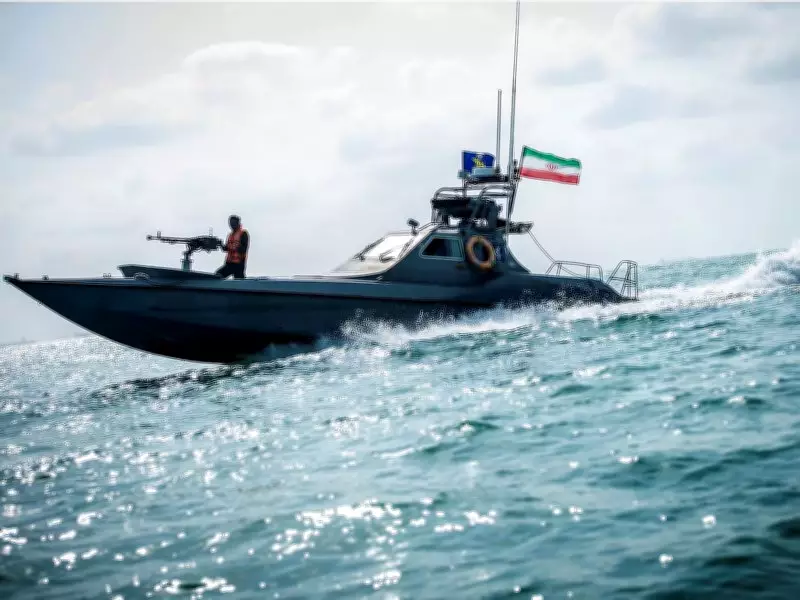
Iran's Islamic Revolutionary Guard Corps (IRGC) navy has issued a stern warning to the United States, cautioning that it may employ 'surprise tactics' in response to what it perceives as provocative actions by US forces in the Persian Gulf. The warning, delivered by IRGC Navy Commander Rear Admiral Alireza Tangsiri, marks a significant escalation in rhetoric between the two nations amid heightened maritime tensions.
Escalating Rhetoric
In a statement carried by Iranian state media, Tangsiri asserted that the IRGC navy is fully prepared to counter any threats and will not hesitate to use unexpected maneuvers to defend Iran's territorial integrity. 'We have various options and surprise tactics that the enemy cannot even imagine,' he said. The commander emphasized that the IRGC's naval forces are monitoring the movements of US warships closely and are ready to respond decisively to any aggression.
US Naval Presence
The warning comes as the US Navy maintains a robust presence in the Persian Gulf and the Strait of Hormuz, a critical waterway for global oil shipments. In recent months, the US has deployed additional warships and aircraft to the region, citing the need to ensure freedom of navigation and deter what it describes as 'destabilizing activities' by Iran. The US Navy's Fifth Fleet, based in Bahrain, regularly conducts patrols and exercises in the area.

Nuclear Talks Background
The rising maritime tensions unfold against the backdrop of stalled negotiations over Iran's nuclear program. Talks in Vienna aimed at reviving the 2015 nuclear deal have made little progress, with both sides accusing each other of intransigence. Iran has continued to enrich uranium beyond the limits set by the agreement, while the US has maintained sanctions that Tehran demands be lifted. The maritime standoff adds another layer of complexity to an already fraught relationship.
Regional Implications
Analysts warn that any miscalculation in the Persian Gulf could lead to a broader conflict, drawing in regional allies and disrupting global energy markets. The IRGC's threat of 'surprise tactics' raises concerns about potential incidents at sea, such as the seizure of commercial vessels or harassment of US warships. In 2019, Iran was accused of attacking oil tankers and shooting down a US drone, while the US retaliated by killing a top Iranian general in a drone strike in Baghdad.
International Reactions
The international community has urged restraint on both sides. The United Nations has called for de-escalation and dialogue to prevent an accidental confrontation. Meanwhile, Gulf states, including Saudi Arabia and the United Arab Emirates, have expressed concern about the impact on regional stability. The European Union has offered to mediate between Iran and the US, but no concrete progress has been reported.
Iran's Military Posture
The IRGC navy, which operates separately from Iran's regular navy, has a history of asymmetric warfare tactics, including the use of fast attack boats, mines, and anti-ship missiles. Tangsiri's comments suggest that the IRGC may be preparing to employ unconventional methods to challenge superior US naval capabilities. Iran has also invested in drones and cyber capabilities, which could be used in a maritime conflict.
As tensions continue to simmer, both sides appear to be preparing for potential confrontation. The US has warned Iran against any aggressive actions, while Iran has vowed to defend its sovereignty. The coming weeks will be critical in determining whether the situation escalates or de-escalates.






