

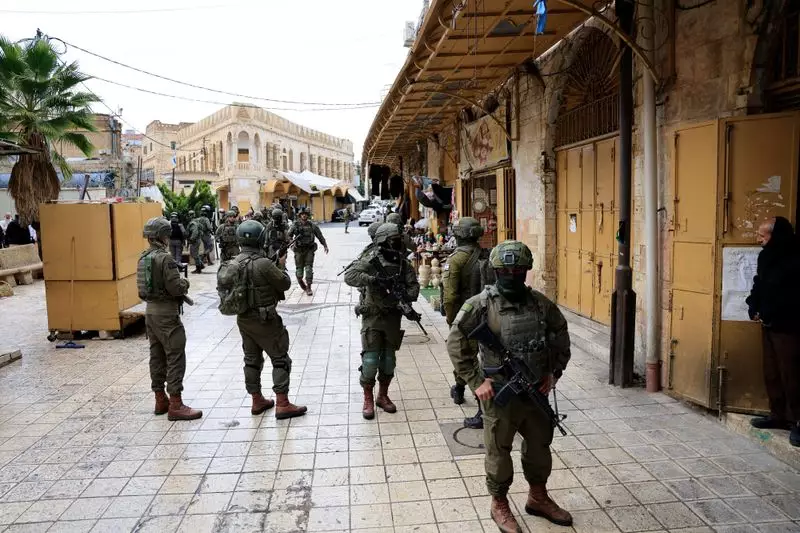
Israel has significantly raised its military alert level, preparing for the possibility of a major escalation in the Middle East. This move comes as the Israeli government anticipates that the United States might launch military strikes against Iran in the near future.
Heightened Military Readiness and Intelligence Assessments
The Israeli defense establishment, including the Israel Defense Forces (IDF), the Mossad intelligence agency, and the Shin Bet security service, is operating on a state of high alert. This heightened posture is a direct response to intelligence assessments suggesting that American military action against Iran is a tangible possibility. Officials are closely monitoring the situation, believing that any such US intervention could trigger immediate retaliation from Iran and its regional proxies against Israeli territory.
This state of readiness was confirmed by multiple sources within the Israeli security apparatus. The preparations are not based on a specific, imminent order from Washington but rather on a strategic evaluation of the escalating tensions between the US and Iran. The core of the dispute remains Iran's advancing nuclear program, which Western powers fear is nearing weapons-grade capability.

The Roots of the Escalating Crisis
The current spike in tensions is rooted in the prolonged stalemate over the revival of the 2015 nuclear deal, formally known as the Joint Comprehensive Plan of Action (JCPOA). Diplomatic efforts have largely stalled, leaving Iran to continue enriching uranium to levels ever closer to what is required for a bomb. This unchecked progress has led to increasingly hawkish rhetoric from Washington, with top officials stating that "all options are on the table" to prevent Iran from obtaining a nuclear weapon.
For Israel, a potential US strike represents a double-edged sword. While it would significantly degrade Iran's nuclear infrastructure—a primary strategic goal for Israel—it also carries the severe risk of dragging the Jewish state into a direct and wide-ranging conflict. Iranian leaders have repeatedly vowed to retaliate against Israel for any attack on its soil, and Tehran's network of allies, including Hezbollah in Lebanon and various militias in Syria and Iraq, could launch simultaneous barrages of rockets and drones.
Preparing for the Aftermath and Regional Implications
Israeli defense planners are now actively gaming out various scenarios that could follow American action. The focus is on defending against a multi-front assault. The Israeli Air Force is on standby, missile defense systems like the Iron Dome, David's Sling, and Arrow are being checked, and civilian defense protocols are being reviewed. The government is also assessing the need to possibly call up reserve units to bolster border defenses.
The situation places Israel in a complex position. Publicly, Israeli leaders have long advocated for a firm stance against Iran and would privately welcome decisive US action. However, they are also acutely aware of the devastating cost of a full-scale war. The alert status underscores a pragmatic approach: hope for a decisive American move to cripple Iran's nuclear ambitions, but prepare for the violent backlash that would almost certainly follow.
This development signals a potentially dangerous new phase in the long-standing shadow war between Iran and its adversaries. The entire Middle East is watching nervously, as a miscalculation or a sudden strike could ignite a regional conflagration with global economic and security consequences. The next steps taken in Washington and Tehran will directly determine whether Israel's high alert translates into active defense or remains a precautionary measure.






