

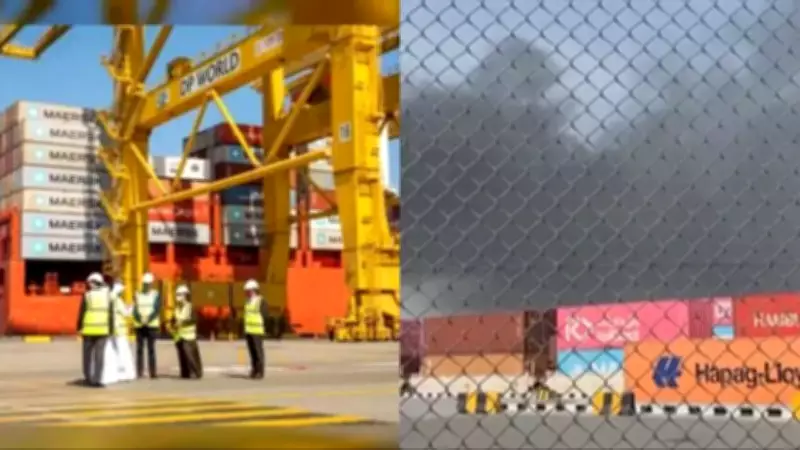
Jebel Ali Port Temporarily Shuts Down After Fire from Aerial Debris
Operations at Jebel Ali Port, the largest container hub in the Middle East, were briefly suspended following a fire ignited by debris from an aerial interception. The incident, which occurred amid escalating regional hostilities involving Iran, the United States, and Israel, led to a precautionary shutdown and comprehensive safety review. Dubai Civil Defence confirmed that the fire was brought under control, and port operator DP World described the halt as a safety measure, with operations resuming after thorough inspections and assessments.
What Triggered the Suspension at the Strategic Port?
Authorities reported that debris from a defensive aerial interception fell near one of the container berths, sparking a blaze. There were no casualties or major structural damage reported. DP World temporarily paused activity across all terminals while security checks were conducted. Officials have not confirmed any direct strike on the port itself, indicating that the disruption resulted from falling debris rather than a targeted attack, highlighting the indirect risks posed by regional conflicts.
Why Jebel Ali Port is Crucial for Global Trade
Jebel Ali is not only the largest port in the Middle East but also one of the world's busiest container terminals. It serves as a major transshipment and re-export hub, connecting Asia, Europe, and Africa. The port handles millions of containers annually and plays a central role in global supply chains, moving energy equipment, manufactured goods, food supplies, and industrial inputs across regions. It is integral to the UAE's economic model as a logistics and trade gateway.

Even brief disruptions at Jebel Ali can have significant impacts, including:
- Delays in vessel schedules and cargo turnaround times
- Increases in freight costs and insurance premiums
- Disruptions to regional distribution networks
- Erosion of investor confidence in Gulf trade corridors
The Broader Security Context in the Gulf Region
The suspension occurred during heightened tensions following military exchanges between Iran and a US–Israel alignment. In recent days, the Gulf region has experienced:
- Missile and drone interceptions over airspace
- Temporary aviation disruptions and rerouted flights
- Heightened security alerts around key infrastructure
While most projectiles have been intercepted by air defence systems, falling debris has posed secondary risks to civilian and commercial areas. There has been no confirmation of sustained infrastructure damage beyond isolated precautionary incidents like this one.
Implications for Global Trade and Supply Chains
This episode underscores the vulnerability of critical trade infrastructure during geopolitical crises. Shipping operators in the Gulf have intensified risk monitoring, and war-risk insurance considerations have become more prominent. As Jebel Ali functions as a central node in global supply chains, even short operational pauses can trigger cascading effects, particularly for countries reliant on Gulf transshipment routes.
The Bottom Line on the Port Incident
The temporary suspension at Jebel Ali Port was a safety-driven response to an indirect impact of regional hostilities. Operations have since resumed, but the event serves as a stark reminder of how geopolitical tensions can spill over into vital commercial hubs, affecting global trade dynamics.






