

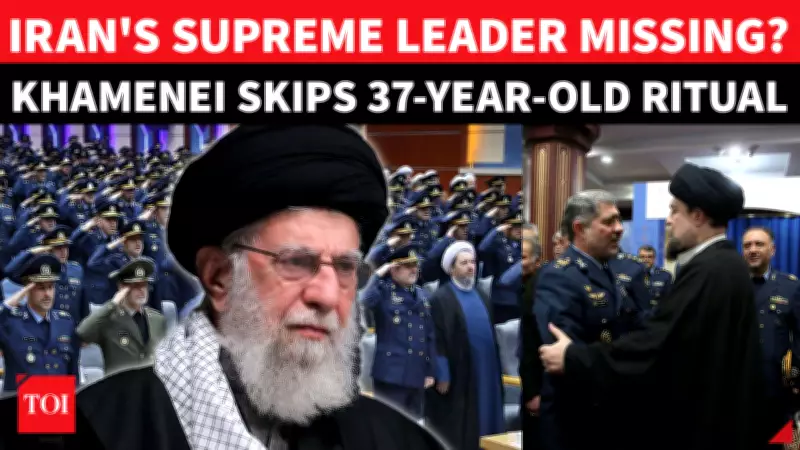
Iran's Supreme Leader Breaks 37-Year Tradition, Misses Key Military Ceremony
In a significant departure from established protocol, Iran's Supreme Leader Ali Khamenei was conspicuously absent from a crucial annual military ceremony for the first time in 37 years. The event, held on February 8th, traditionally sees the country's air force commanders pledge their allegiance directly to the Supreme Leader, a ritual that has been meticulously observed since Khamenei assumed leadership in 1989.
Symbolic Shift in Leadership Representation
Instead of Khamenei, the ceremony was attended by Hassan Khomeini, the grandson of the Islamic Republic's founder, Ayatollah Ruhollah Khomeini. This substitution carries profound symbolic weight within Iran's political and military hierarchy, where visual presence and protocol are closely tied to authority and legitimacy. The event was also overseen by Armed Forces Chief of Staff Major General Abdolrahim Mousavi, further emphasizing the unusual nature of Khamenei's non-attendance.
Historical Consistency Broken

Throughout his tenure, Khamenei has maintained this ritual without fail, even during periods of intense national crisis. His presence was recorded during the Iran-Iraq war, domestic unrest, and the global COVID-19 pandemic, making this year's absence particularly noteworthy. The ceremony serves as a public reaffirmation of the military's loyalty to the Supreme Leader, a cornerstone of Iran's power structure.
Regional Context and Speculation
This break in tradition occurs against a backdrop of escalating regional tensions and an expanding U.S. military presence near Iran's borders. Tehran faces mounting external pressure, including diplomatic strains and security challenges, which has led to intense speculation about the message behind Khamenei's absence. Analysts suggest that such a deliberate deviation from long-standing practice may be intended to signal shifts in internal dynamics or strategic posturing to both domestic and international audiences.
Questions Over Leadership and Messaging
The replacement of Khamenei with Hassan Khomeini raises questions about potential generational transitions or symbolic gestures toward the legacy of the republic's founder. In a system where optics often speak louder than words, this single absence has ignited discussions about authority, continuity, and the subtle communications within Iran's complex political landscape. The event underscores how even minor changes in protocol can reverberate through the corridors of power, especially at a time of heightened geopolitical sensitivity.






