

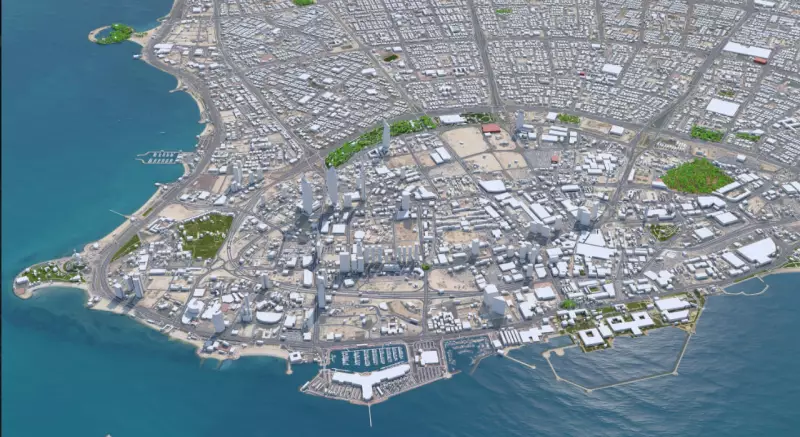
Against the backdrop of a glittering skyline and thriving cities, Kuwait presents a startling paradox. This high-income nation, famed for its vast oil reserves and cultural influence, is built upon one of the most water-scarce landscapes on the planet. Roughly the size of New Jersey, its 18,000 square kilometres of territory are almost entirely barren desert, nestled between Iraq and Saudi Arabia at the Persian Gulf's northern edge.
Despite being part of the historic Tigris-Euphrates basin, Kuwait itself possesses no rivers, no lakes, and no perennial streams. It stands as a global outlier, classified by the United Nations as having zero internal renewable freshwater resources. For its nearly 4.9 million residents, every drop of fresh water is a product of human ingenuity, not nature's bounty.
The Stark Reality of a Waterless Land
Kuwait's hyper-arid climate dictates its harsh reality. Annual rainfall averages less than 120 millimetres, and the intense heat ensures most of this evaporates before it can be stored. The flat desert terrain offers no mountains to trap moisture or significant aquifers to tap. While dry riverbeds, known as wadis—like Wadi al Batin, sometimes called the "Kuwait River"—can briefly flood after rare heavy rains, the water quickly disappears. High evaporation rates and porous soil prevent meaningful groundwater recharge, leaving the country with negligible natural reserves.

A 2023 World Bank report underscored this extreme condition, noting Kuwait has zero cubic kilometres of internal renewable water resources per year. This makes it one of the most geographically water-stressed nations globally, more so than neighbours like the UAE or Bahrain, which have at least some groundwater.
Engineering a Lifeline from the Sea
With nature providing no solution, Kuwait turned to the sea. The answer has been large-scale, energy-intensive seawater desalination, a technology that became the cornerstone of national survival. The journey began in 1953 with the country's first desalination plant, marking a pivotal shift towards technological reliance.
Today, this infrastructure defines Kuwait's water security. Over 90 percent of the nation's drinking water now comes from desalinating seawater from the Arabian Gulf. Major coastal facilities like the Shuwaikh, Doha East, and Az-Zour plants treat vast quantities. The Az-Zour North complex, one of the region's largest, produces a staggering over 480,000 cubic meters of water daily, according to MEED (Middle East Economic Digest).
This desalinated water flows to households, industries, and public services, sustaining modern life. To conserve this costly resource for drinking, Kuwait employs a secondary strategy: using highly treated wastewater. This reclaimed water, though not potable, is crucial for irrigating fodder crops, date palm groves, and urban greenery.
The Price of Manufactured Water and Future Challenges
Kuwait's achievement in building a functioning modern state in such an arid zone is an engineering triumph. It maintains one of the world's highest per-capita water consumption rates, a testament to its advanced infrastructure. The country continues to invest in sustainable innovations, including solar-powered desalination, advanced reverse osmosis systems, and expanded wastewater reuse.
However, this model comes with significant vulnerabilities. Desalination is profoundly energy-intensive, tying water security directly to fossil fuel supply and stable power infrastructure. Experts warn that rising energy costs, geopolitical risks, and climate change impacts pose constant threats. In response, Kuwait is exploring public-private partnerships (PPPs) to build more resilient systems and diversify its technological base.
The broader implication is a structural economic challenge. As the world moves towards post-hydrocarbon economies, Kuwait's most basic necessity—water—remains locked to an energy-demanding process. Reducing reliance on oil is intricately complicated when freshwater production itself depends on it.

Kuwait's story is thus a powerful blueprint and a cautionary tale. It demonstrates that in the 21st century, water security can no longer be taken as a geographical gift. For an increasing number of regions facing scarcity, it must be consciously engineered, powered, and sustained—a lesson Kuwait has been learning for over seven decades.





