

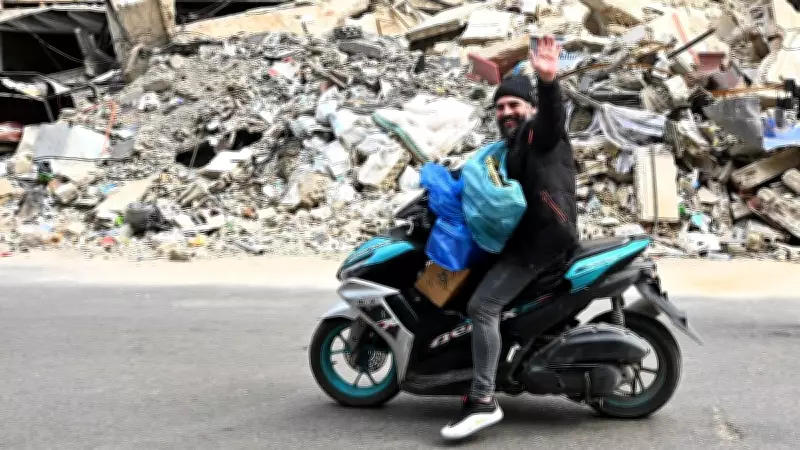
Displaced Lebanese Civilians Return Home as Fragile Ceasefire with Israel Holds
In a significant development in the Middle East, thousands of displaced Lebanese civilians have started returning to their homes in southern Lebanon. This movement comes as a ceasefire agreement between Lebanon and Israel remains mostly intact, offering a temporary respite from the recent hostilities that have gripped the region.
Ceasefire Holds Amid Lingering Tensions
The ceasefire, which was brokered after a period of intense cross-border exchanges, has largely held firm, allowing for the safe return of residents who had fled their villages due to the escalating conflict. Reports indicate that the truce has been generally respected by both sides, though isolated incidents of minor violations have been noted, underscoring the fragile nature of the peace.
Authorities in Lebanon have been facilitating the return process, with security forces deployed to ensure the safety of civilians as they navigate back to their homes. Many returnees are assessing the damage to their properties, which in some cases has been substantial due to the recent shelling and airstrikes.

Humanitarian Impact and Regional Implications
The displacement had affected a significant number of families, with humanitarian organizations providing aid to those in need during the crisis. The return of civilians is seen as a positive step towards normalcy, but concerns remain about the long-term stability of the area. The ceasefire's durability is crucial for preventing further displacement and allowing for reconstruction efforts to begin.
This development occurs against a backdrop of ongoing regional tensions, with the conflict between Israel and Hezbollah, a Lebanese militant group, being a key factor. The ceasefire is viewed as a temporary measure, and diplomatic efforts are underway to address the underlying issues that could lead to renewed hostilities.
Challenges Ahead for Lebanon and Israel
While the ceasefire holds, both Lebanon and Israel face challenges in maintaining peace. Lebanon is grappling with internal political and economic crises, which could complicate its ability to enforce the truce effectively. On the other hand, Israel has emphasized its right to defend its borders, indicating that any breach of the ceasefire could prompt a swift response.
The international community has been monitoring the situation closely, with calls for restraint and dialogue to prevent a further escalation. The return of displaced civilians is a hopeful sign, but it highlights the urgent need for a more permanent solution to the conflicts in the Middle East.
In summary, the ceasefire between Lebanon and Israel has enabled the return of displaced Lebanese civilians, offering a glimpse of stability in a volatile region. However, the fragility of the truce and the persistent tensions underscore the complexities of achieving lasting peace in the Middle East.






