

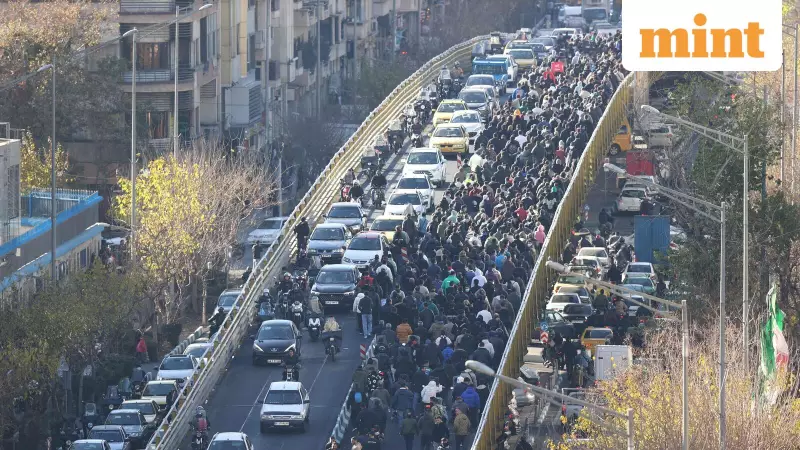
Iran is facing a significant wave of civil unrest as widespread protests, initially led by shopkeepers and bazaar merchants, have now spread to university campuses. The demonstrations are a direct response to the country's severe economic challenges and skyrocketing cost of living.
Government Acknowledges Public Anger
In a notable move, Iranian President Masoud Pezeshkian publicly addressed the growing discontent. Using social media platform X, he stated that the government had officially recognized the protests. He emphasized that the livelihood of citizens was his daily concern and outlined plans for reforming the monetary and banking system.
Pezeshkian revealed he had directed the Interior Minister to engage in dialogue with representatives of the protesters to hear their legitimate demands. He pledged that the government would act with all its might to resolve the pressing problems.

Echoing the president's sentiment, government spokesperson Fatemeh Mohajerani confirmed that a dialogue mechanism would be established. She acknowledged that the protests stem from the natural pressure on people's livelihoods due to the economic situation.
How the Demonstrations Unfolded
The protests, which began in the traditional bazaars, quickly gained momentum. They subsequently reached at least four universities in Tehran, where hundreds of students joined the demonstrators marching through the streets.
Social media platforms were flooded with hundreds of posts supporting the demonstrators. Footage broadcast by Iranian state television on Monday showed crowds gathered in central Tehran, chanting slogans.
In a related development, President Pezeshkian met with trade unions and market activists on Tuesday. According to state media reports, he assured them that the government would do its utmost to resolve their issues and address their concerns.
Roots of the Economic Crisis
The current turmoil has deep-seated economic causes. Iran's economy has been struggling for years, a situation exacerbated when the United States reimposed sanctions in 2018. This occurred after then-President Donald Trump withdrew from the international nuclear deal during his first term.
The economic pressure intensified further in September when United Nations sanctions were reimposed. This followed US forces bombing three nuclear facilities in Iran amid its tensions with Israel.
The economic indicators are stark. On Tuesday, the Iranian rial plummeted to a historic low, trading at 1.4 million rials to the US dollar on private exchange platforms. This marks a dramatic fall from the rate of 817,500 rials to the dollar at the start of the year.
Inflation remains cripplingly high. Official figures show that monthly annualised inflation has not fallen below 36.4% since the Iranian new year began in late March. This relentless economic pressure has pushed many citizens to the brink, fueling the current wave of protests across different segments of society.






