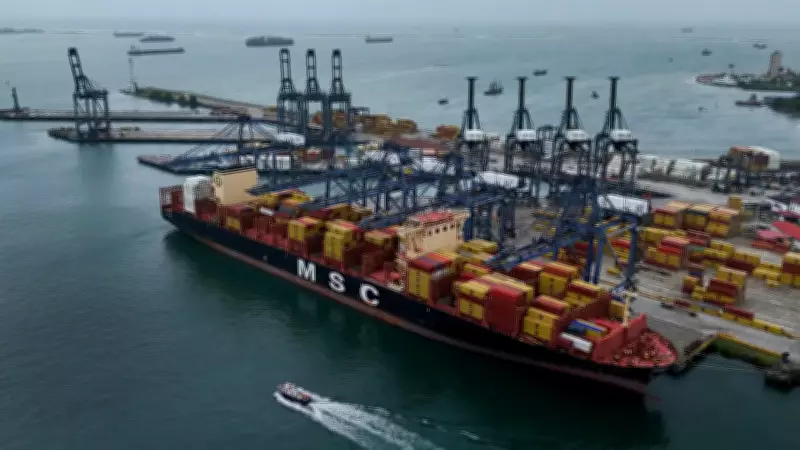
Middle East Conflict Severely Disrupts Global Shipping Routes with Electronic Warfare
The intensifying war in the Middle East is creating significant disruptions across one of the world's most critical maritime corridors, with cargo ships, oil tankers and commercial vessels facing unprecedented challenges navigating waters around the Gulf region. As fighting between Iran, Israel and the United States escalates, the ripple effects are extending far beyond traditional battlefields to impact global trade routes that transport substantial portions of the world's energy resources and commercial goods.
Widespread Navigation Disruptions in Vital Shipping Lanes
Since the conflict erupted on February 28, 2026, attacks, drone interceptions and sophisticated electronic warfare have created an increasingly hostile environment for maritime traffic throughout the Gulf and Gulf of Oman regions. Shipping companies and maritime analysts report that the conflict has not only heightened fears of physical attacks on vessels but has also triggered extensive disruption to satellite navigation systems essential for modern shipping operations.
The result for shipping companies is a rapidly evolving risk landscape. The strategically vital Strait of Hormuz, through which approximately one-fifth of global oil and gas supplies pass, has already experienced significant pressure as energy facilities and critical infrastructure across the Gulf become military targets. One of the most pressing problems has been widespread GPS signal jamming across large sections of the region.

According to detailed analysis from maritime experts, approximately 1,000 vessels operating in the Gulf and Gulf of Oman have experienced navigation disruptions since the conflict began. This substantial number represents roughly half of all ships currently operating in these waters, with many vessels clustered off the coasts of the United Arab Emirates and Oman.
Technical Vulnerabilities in Modern Shipping Systems
Modern cargo vessels depend heavily on satellite navigation systems to determine their precise positions at sea. However, numerous ships continue to rely on older GPS technology that proves significantly less resilient to electronic interference. Unlike contemporary smartphones that can receive signals from multiple global satellite networks including America's GPS, Europe's Galileo, Russia's GLONASS and China's BeiDou systems, many commercial vessels only utilize a single older civilian GPS signal known as the L1 C/A frequency.
This particular signal has been in operation since the early 1990s and remains relatively vulnerable to disruption. Technical experts emphasize that this limitation renders ships especially susceptible when electronic warfare systems actively jam navigation signals. By transmitting stronger signals on identical frequencies, jammers can effectively overwhelm legitimate GPS transmissions, preventing vessels from determining their accurate positions.
These disruptions can last mere seconds or continue for extended periods, leaving ship captains uncertain about their positions in some of the world's busiest shipping lanes. In extreme scenarios, vessels may temporarily lose electronic navigation capabilities entirely, forcing crews to revert to traditional methods including radar systems and visual landmark identification.
For massive cargo vessels stretching hundreds of meters in length, navigating congested waters without accurate positioning systems presents serious operational hazards and increased collision risks.
Spoofing Attacks and Advanced Electronic Warfare Tactics
Beyond basic signal jamming, a more sophisticated form of interference known as "spoofing" is generating increasing concern among maritime security experts. Spoofing attacks manipulate a ship's Automatic Identification System (AIS), the universal radio system vessels use to broadcast their identity, precise location and destination information every second.

By injecting false data into these systems, attackers can make ships appear in entirely different locations from their actual positions. In documented cases, affected vessels have appeared on maritime tracking maps as being situated on land or within another country's territorial waters. This creates substantial confusion not only for ship crews but also for maritime authorities monitoring traffic in critical waterways.
The problem intensifies because GPS signals serve multiple functions beyond basic navigation. On modern vessels, they synchronize onboard clocks, radar systems and speed logs. When signals experience disruption, multiple ship systems can malfunction simultaneously, compounding operational challenges.
Defensive Measures Creating Unintended Consequences
Much of the electronic interference appears connected to defensive measures deployed by nations attempting to protect themselves from drone and missile attacks. Gulf states have reportedly implemented GPS jamming systems along their coastlines to interfere with satellite-guided drones launched by Iran. These defensive actions can create extensive zones where navigation signals become unreliable, affecting civilian infrastructure and commercial shipping alongside military targets.
Similar electronic warfare tactics have emerged in previous regional conflicts. Israel deployed comprehensive GPS disruption measures during earlier regional tensions, while Iran has demonstrated electronic warfare capabilities during previous confrontations. The current conflict's expansion continues as Israel intensifies strikes in Lebanon and Iran, while Tehran launches drones and missiles at targets across Gulf states including the UAE, Saudi Arabia and Kuwait.
With air defense systems intercepting projectiles throughout the region and military forces deploying electronic warfare measures, the maritime environment has grown increasingly unpredictable for commercial shipping operations. The widening conflict demonstrates how regional warfare can generate substantial disruptions to global trade networks, particularly affecting energy transportation through some of the world's most strategically important waterways.