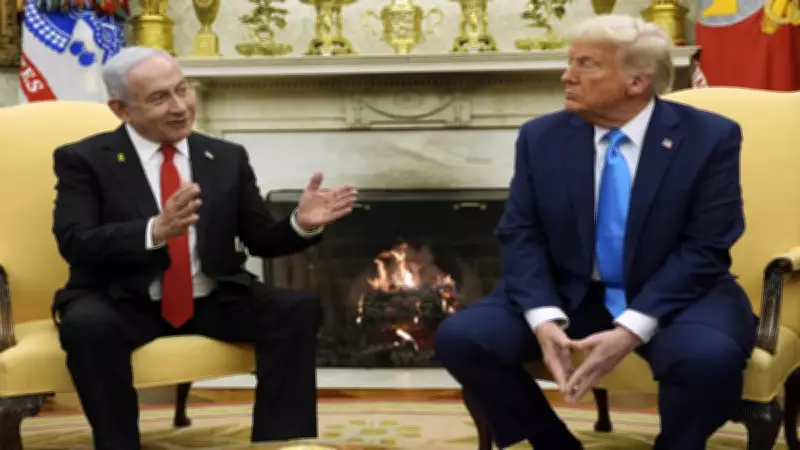
Israeli Prime Minister Benjamin Netanyahu has voiced strong opposition to the proposed US sale of F-35 fighter jets to Turkey, cautioning President Donald Trump that such a move would significantly disrupt the Middle East power balance and pose a direct threat to Israel's national security. The warning came during recent high-level discussions between the two leaders, according to sources familiar with the matter.
Netanyahu's Concerns Over F-35 Sale
Netanyahu reportedly argued that equipping Turkey with the advanced stealth aircraft would undermine Israel's qualitative military edge in the region, a long-standing US policy. The F-35 is a fifth-generation multirole fighter known for its stealth capabilities, advanced sensors, and network connectivity, making it a game-changer in aerial warfare. Israel currently operates a fleet of F-35s and relies on their technological superiority for regional deterrence.
According to an Israeli official who spoke on condition of anonymity, Netanyahu emphasized that Turkey's recent political trajectory under President Recep Tayyip Erdogan, including its growing alignment with Russia and Iran, makes the sale particularly risky. The official stated, "The prime minister made it clear that transferring such sensitive technology to a nation with increasingly adversarial policies could have severe consequences for regional stability."

US-Turkey Relations and the F-35 Program
The US had previously suspended Turkey from the F-35 program in 2019 after Ankara acquired the Russian S-400 missile defense system, which Washington deemed a security risk. However, recent diplomatic overtures have raised speculation about a potential reinstatement. Turkey has expressed interest in purchasing 40 F-35 jets, a deal worth billions of dollars.
Proponents of the sale argue it could help repair strained US-Turkey relations and bring Ankara back into the NATO fold. However, critics, including Netanyahu, contend that Erdogan's government has used its military capabilities to assert influence in Syria, Libya, and the Eastern Mediterranean, often in ways that conflict with Israeli and Western interests.
Regional Power Dynamics
The Middle East power balance is a delicate ecosystem, with Israel, Turkey, Iran, and Saudi Arabia as key players. Israel's qualitative military edge has been a cornerstone of US policy, ensuring that no regional adversary can match its military capabilities. The introduction of F-35s into the Turkish air force would erode that advantage, as the aircraft's stealth technology could potentially counter Israel's existing air defenses.
Netanyahu also warned that Turkey could share F-35 technology with Russia or Iran, further destabilizing the region. A former Israeli defense official noted, "The risk of technology transfer to hostile actors is a real and present danger. We have seen Turkey's willingness to cooperate with Russia on defense matters, and this sale would open a Pandora's box."
Impact on Israel's Security
Israel has long relied on its air superiority to conduct operations against threats such as Iran's nuclear program, Hezbollah in Lebanon, and Hamas in Gaza. The F-35 is integral to these missions, providing unmatched situational awareness and strike capability. If Turkey acquires the same platform, it could potentially track or even target Israeli aircraft, complicating military planning.
Moreover, the sale could trigger an arms race in the region, prompting other nations like Saudi Arabia and the United Arab Emirates to seek advanced weaponry. This would further strain an already volatile security environment.
Diplomatic Push and Next Steps
Netanyahu has instructed Israeli diplomats to lobby US lawmakers and defense officials against the sale. The issue is expected to be a key topic during Trump's upcoming visit to Israel, where the two leaders are likely to discuss broader strategic cooperation.
For now, the Biden administration has not made a final decision, but the debate highlights the complex interplay of alliances, security concerns, and geopolitical interests in the Middle East. The outcome will have lasting implications for the region's power dynamics and Israel's ability to defend itself.