

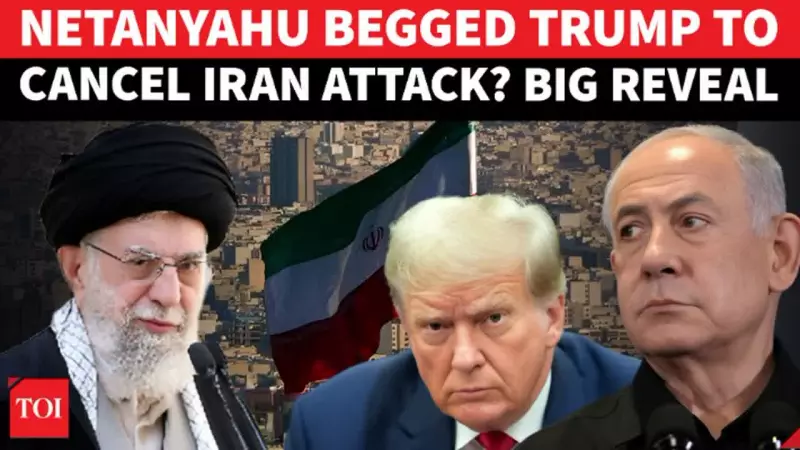
Netanyahu's Urgent Call to Trump Stopped Imminent Iran Strike
For several tense days, the Middle East teetered on the brink of a major conflict. The United States openly signaled plans for military action against Iran. Allies across the region braced for potential escalation. Tehran prepared its forces for a forceful retaliation. Then, abruptly, Washington called off the planned strikes.
The Official Story Versus Behind-the-Scenes Reality
U.S. President Donald Trump publicly stated he alone made the decision. He cited Iran's sudden halt of mass executions against protesters as the key reason. However, new reports paint a different picture of what truly happened behind closed doors.
Intense private warnings from Israel played a crucial role in stopping the attack. Israeli officials expressed grave concerns about regional stability. They highlighted the serious risks of immediate military action.

Israel's Stark Admission of Unpreparedness
Most significantly, Israeli Prime Minister Benjamin Netanyahu conveyed a startling admission to President Trump. Netanyahu reportedly stated that Israel was not fully prepared to absorb Iran's expected response to a U.S. strike. This frank assessment carried considerable weight in Washington's deliberations.
The Israeli leader emphasized the potential for rapid escalation. He outlined scenarios where limited strikes could spiral into a broader regional war. His urgent communications underscored the dangers of miscalculation.
Military Limitations and Mounting Risks
Several practical factors contributed to the last-minute decision to stand down. U.S. military assets in the region faced certain limitations at that moment. Regional risks were mounting with each passing hour of tension.
American commanders expressed concerns about operational readiness. They noted the challenges of executing a precise, limited strike without triggering wider hostilities. The complexity of the military situation became increasingly apparent.
The Countdown That Stopped
The countdown to potential war halted literally at the final moments. Diplomatic channels remained active throughout the crisis. Key allies communicated their reservations about immediate action.
Ultimately, the combination of Israel's stark warning and practical military considerations prevailed. The region stepped back from what many feared would become another devastating Middle East conflict. The episode revealed the delicate balance of power and communication that prevents escalation in volatile situations.






